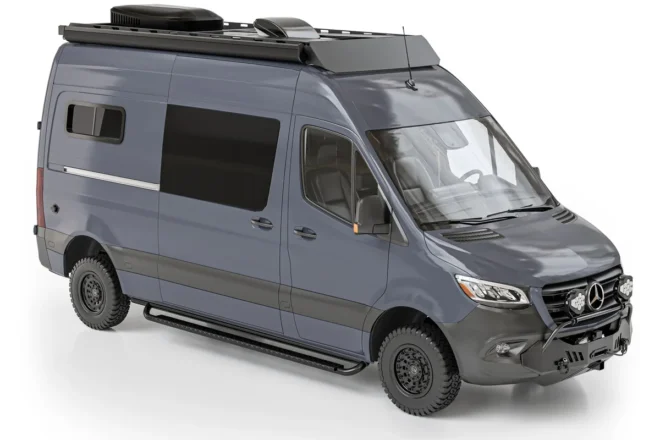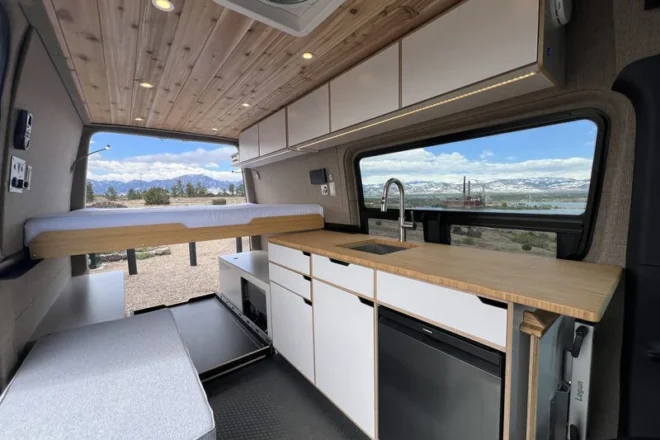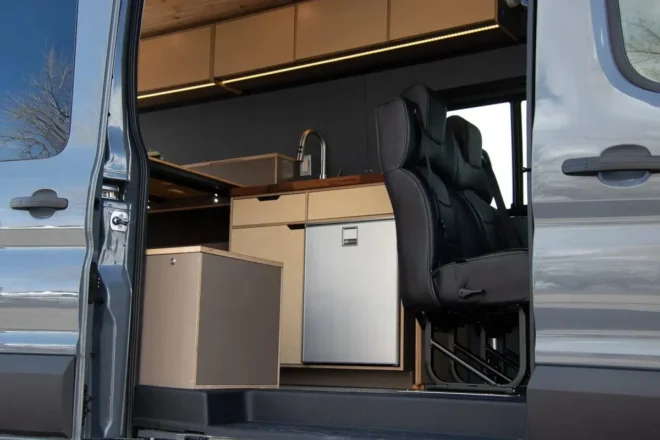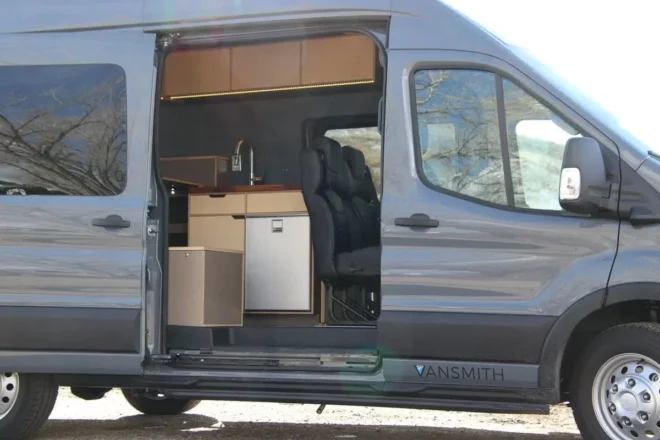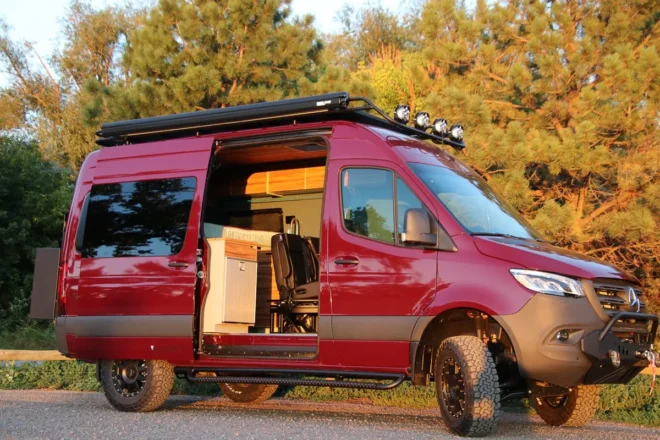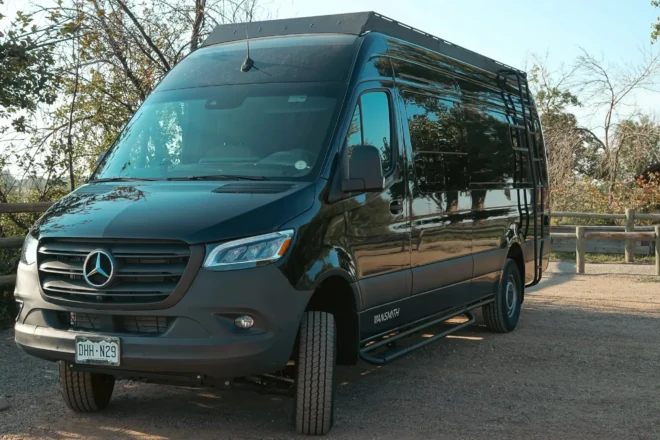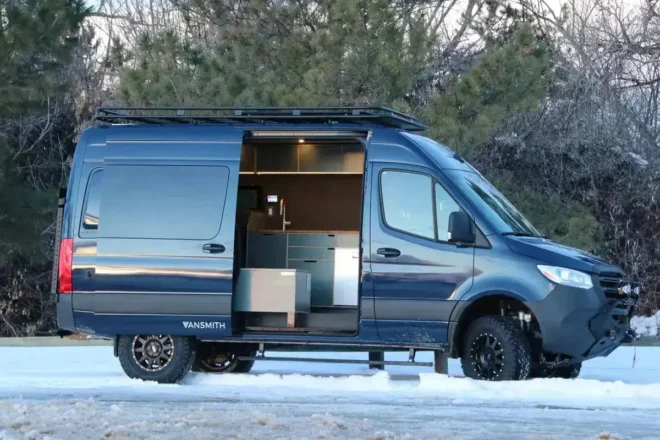
Sprinter Bivy Plus
$145,845



The right work van is not just a vehicle — it is a mobile workspace that either supports your operation or slows it down. Tradespeople, contractors, service technicians, and small business owners who run tight schedules cannot afford a van that lacks organization, reliability, or interior functionality. If you are ready to buy and want to compare real inventory rather than scroll through unrelated listings, RVenture Trader gives you direct access to work vans for sale built and configured for professional daily use.
Every listing in this category is focused on commercial utility — shelving systems, load-out configurations, electrical upgrades, and cargo-ready interiors that reflect how real work gets done. Browse current inventory and find the commercial van that matches your trade, your territory, and your budget.
Commercial vans for sale span a wide price range depending on the base vehicle year, mileage, upfit quality, and whether the build is trade-specific or general-purpose. Here is what buyers should expect at each tier:
Scroll right to see full table →
| Tier | Price Range | Typical Spec |
|---|---|---|
| Entry-Level Used | $12,000 – $22,000 | 2010–2016 base van, basic shelving, higher mileage, minimal electrical upgrades |
| Mid-Range Upfitted | $25,000 – $48,000 | 2017–2021 platform, quality racking system, partition, LED lighting, moderate mileage |
| Professional Build | $50,000 – $80,000 | 2020+ base, full trade-specific fit-out, inverter system, low mileage, fleet-maintained |
| Specialty / Custom | $80,000+ | Purpose-built configurations for specific industries — medical, tech, high-voltage trades |
Businesses prioritizing fuel efficiency and reduced operating costs should also consider reviewing eco-friendly van builds where hybrid and electric-compatible commercial conversions are increasingly available for fleet operators looking to reduce long-term running costs.

A bare cargo van and a purpose-built work van are not the same thing. The difference is in how the interior has been configured to support productivity from the moment you open the rear doors. Buyers comparing listings should evaluate these core build elements:
Buyers who need a van that doubles as a remote workspace should also review mobile office van listings on RVenture Trader, where builds are specifically configured for on-site productivity with desk setups, connectivity hardware, and power management systems.
The base vehicle determines cargo volume, towing capacity, serviceability, and long-term running costs. These are the platforms most commonly found in professional commercial van configurations on the market today:
Scroll right to see full table →
| Base Van | Cargo Volume | Payload Capacity | Best Trade Application | Wheelbase Options |
|---|---|---|---|---|
| Mercedes Sprinter | Up to 487 cu ft | Up to 5,000 lbs | HVAC, electrical, multi-trade service | Standard & Extended |
| Ford Transit | Up to 487 cu ft | Up to 4,650 lbs | Plumbing, construction, general trade | Standard & Extended |
| Ram ProMaster | Up to 460 cu ft | Up to 4,680 lbs | Delivery, medical supply, cargo hauling | Standard & Extended |
| Nissan NV | Up to 323 cu ft | Up to 3,771 lbs | Landscaping, light trade, urban routes | Standard |
| Ford Transit Connect | Up to 128 cu ft | Up to 1,600 lbs | Urban delivery, small tools, tech service | Standard & Long |
Sprinter-based commercial builds offer one of the highest cargo volumes in the class alongside a well-developed aftermarket for racking, partitions, and upfitting hardware. Explore Sprinter vans currently listed for sale to compare mileage, upfit configurations, and asking prices across current inventory.
Ford Transit listings cover the widest range of price points and are widely supported by upfitters and fleet dealers across North America. Browse Transit vans available on RVenture Trader to find cargo-ready builds across standard and extended configurations.

The buyers active in this category are not browsing casually. They have a specific operational need and are comparing options to make a purchase decision. The most common buyer profiles on RVenture Trader include:
Electricians, plumbers, HVAC technicians, and carpenters who operate as sole traders or small crews and need a fully upfitted van they can put to work immediately. Pre-configured listings save significant time and capital compared to buying a bare van and paying for a full upfit.
Service businesses running two to ten vehicles who are expanding, replacing aging units, or standardizing their fleet configuration. RVenture Trader's inventory gives fleet buyers access to consistent spec vehicles without going through a single dealer's limited stock.
Detailers, mobile mechanics, equipment repair technicians, and cleaning service operators who need a utility van configured around their specific workflow rather than a generic cargo build. The ability to search by interior configuration makes finding the right match faster and more precise.
Many buyers in this segment are moving from an open bed pickup to an enclosed work van for sale after experiencing equipment theft, weather damage, or simply outgrowing the storage capacity of their current vehicle. A fully enclosed and organized van interior fundamentally changes how a field operation functions day to day.

Mainstream vehicle marketplaces treat cargo vans and work vans as an afterthought, mixing them in with passenger vehicles and providing minimal specification detail. RVenture Trader is purpose-built for the conversion and specialty van market, which means the platform and the sellers here speak the same language as professional buyers.
Buyers who are still weighing a dedicated work build against a multi-purpose camper van conversion can browse both categories side by side to compare interior layouts, base platforms, and pricing before committing.
Buyer-focused answers for those actively comparing commercial van options before making a purchase.
The terms are often used interchangeably, but there is a practical distinction in how buyers and sellers use them. A work van typically refers to a full-size cargo van that has been upfitted with trade-specific interior components — shelving, drawers, partitions, and electrical systems — optimized for a particular occupation or industry. A utility van more commonly refers to a lighter-duty or mid-size cargo van used for general hauling, delivery, or service work without heavy trade-specific configuration. Both are found in the commercial van category on RVenture Trader. When evaluating listings, focus on the interior build spec rather than the label to determine whether the vehicle fits your operational needs.
High-roof vans allow full standing height inside the cargo area, which is a significant ergonomic advantage for tradespeople who spend extended time working inside the van. If you regularly access overhead storage, work standing at a bench, or carry tall equipment such as pipe, conduit, or ductwork, the high-roof configuration is worth the added cost. Standard-roof vans are easier to park in structures with height restrictions and typically cost less to purchase and insure. For most trades, the high-roof premium pays for itself quickly in productivity and physical comfort. If your work is primarily delivery or light cargo hauling where you rarely enter the cargo area while stationary, a standard roof is a practical and more cost-effective choice.
Fleet maintenance history is the single most important document to request. A commercial van that has been fleet-serviced on schedule will typically outlast a privately owned vehicle of the same mileage by a significant margin. Beyond service records, inspect the cargo floor for delamination, water damage, or structural wear under racking systems. Check all electrical upgrades — inverters, outlets, and lighting — for proper installation and current function. Examine the shelving and drawer systems for structural integrity, particularly at mounting points which carry significant stress over time. Check the cab for signs of heavy use: seat wear, pedal wear, and steering column condition are reliable indicators of true working hours regardless of the odometer reading. An independent pre-purchase inspection from a commercial vehicle mechanic is money well spent before finalizing any used work van purchase.
Both platforms are well-suited for commercial use, and the right choice depends on your specific operational priorities. The Mercedes Sprinter offers a taller interior standing height across most configurations, a larger available cargo volume in the extended wheelbase, and strong resale values. The main trade-off is higher maintenance costs and fewer service locations outside major metropolitan areas. The Ford Transit matches the Sprinter in cargo volume at a lower purchase price and has a substantially larger dealer and independent service network across North America, which is a meaningful advantage for operators who travel regionally or need quick turnaround on repairs. For urban-based trades with access to specialist mechanics, the Sprinter is a premium choice. For operators covering wider geographic areas or managing tighter maintenance budgets, the Transit offers better total-cost-of-ownership for most use cases.
In most cases, yes — a van used primarily for business purposes qualifies for deductions under standard business vehicle expense rules in the United States and many other jurisdictions. The IRS allows Section 179 expensing for vehicles over 6,000 lbs GVWR, which includes most full-size commercial vans, allowing businesses to deduct the full purchase price in the year of acquisition rather than depreciating over several years. Bonus depreciation rules have also historically applied to qualifying commercial vehicles. However, the specific deductible amount, vehicle classification, and applicable rules depend on your business structure, the percentage of business versus personal use, and current tax law. Always consult a qualified accountant or tax professional before making a vehicle purchase decision based on expected tax treatment.
Quality commercial van upfits share a set of consistent characteristics that are straightforward to evaluate in person. Shelving and racking should be mounted through the van's structural ribs or reinforced mounting points — not directly into the sheet metal skin. All mounting hardware should be appropriate grade for load-bearing use, with no visible rust, stripped threads, or makeshift fasteners. Electrical additions should have properly rated wiring with clean runs, protected cable routing, appropriate fuse protection, and no evidence of amateur splicing or exposed connections. Flooring should be fully secured with no lifting edges or soft spots that indicate moisture underneath. Drawer slides should operate smoothly under load with positive locking engagement. A low-quality upfit will reveal itself through rattling components, visible corrosion at mounting points, and improvised solutions that would not pass a commercial vehicle safety inspection. When in doubt, have a commercial vehicle upfitter inspect the build before purchase — their assessment can save you significant remediation costs.