

Camper Van for Arizona
Shopping for a camper van for sale in Arizona means prioritizing closed-cell insulation, high-output roof ventilation, compressor refrigeration, ceramic window tinting, and an oversized solar array with lithium battery storage — not just a comfortable floor plan. Arizona’s summers push past 115°F in Phoenix, UV exposure degrades poorly built interiors fast, and dispersed camping areas across the Sonoran Desert and Colorado Plateau sit hours from the nearest service stop. RVenture Trader filters inventory by van type, chassis, capacity, and build features so you can identify listings that are actually spec’d for desert conditions and get on the road with a van that performs from day one.
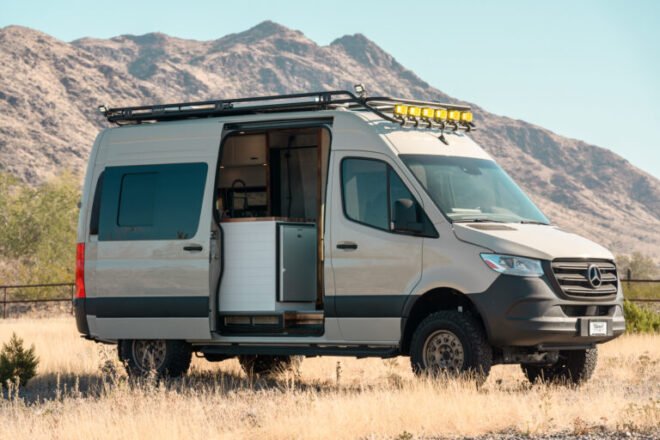
What the Arizona Climate Actually Demands From a Conversion Van
Van builds designed for the Pacific Northwest or the Southeast do not translate cleanly to Arizona conditions. The desert operates on extremes — intense daytime heat, rapid overnight temperature drops, months of relentless UV exposure, and remote routes where the nearest town is an hour away on washboard dirt.
Here is what separates a genuinely Arizona-capable van from one that looks good in listing photos:
- Closed-cell spray foam insulation: Resists heat transfer and moisture buildup more effectively than rigid board. Non-negotiable for summer desert travel.
- High-output roof ventilation: A variable-speed fan with a rain sensor handles temperature regulation and condensation without running shore power.
- Compressor refrigeration: Thermoelectric coolers lose efficiency above 90°F. A compressor fridge maintains temperature regardless of ambient heat.
- Lithium battery bank: 200Ah minimum for daily off-grid use. 300Ah or more for comfortable extended stays in remote areas.
- Solar array sized for desert sun: Arizona averages over 300 sunny days per year. A properly sized rooftop system eliminates shore power dependency entirely.
- Extended water storage: Desert BLM routes regularly run 60 or more miles between water access points. Vans with 20+ gallon tanks are significantly better equipped.
- High-roof clearance: Extended remote stays mean more time inside the van. Standing height is a practical necessity, not a preference.
Why Mechanical Condition Matters More Here
Arizona's remote stretches are not places to discover that a van has deferred maintenance. Before committing to any listing, request the full service history and conversion documentation. On RVenture Trader, sellers provide build specs upfront — which means fewer surprises and faster due diligence on your end.
Platform Comparison: Sprinter vs Transit for Arizona
Two platforms dominate the Arizona camper van market. Both are capable. The right choice depends on your budget, intended use, and how long you plan to live in the van.
Scroll right to see full table →
| Feature | Mercedes Sprinter | Ford Transit |
|---|---|---|
| Interior space | Larger, especially high-roof LWB | Comparable, slightly narrower |
| Entry price | Higher | Lower |
| Parts availability in AZ | Good in major cities | Excellent statewide |
| Conversion quality ceiling | Very high — pro builds common | High — wide builder support |
| Best suited for | Full-time desert living | Part-time travel, budget buyers |
| Fuel type options | Diesel | Gas or Diesel |
Buyers looking for high-roof Sprinter builds with dual lithium banks and professional-grade insulation can view all available Sprinter conversions here. For Transit-based builds across a range of price points and configurations, the full Transit inventory is listed here.
Arizona Camper Van Pricing by Build Type
What you pay depends heavily on who built the van, how comprehensively it was converted, and the age and mileage of the base chassis. The table below reflects realistic market ranges you will encounter on RVenture Trader.
Scroll right to see full table →
| Build Category | Typical Configuration | Price Range | Best For |
|---|---|---|---|
| Entry Level | Basic insulation, minimal solar, simple bed | $18,000 – $35,000 | Weekend desert trips |
| Mid-Range | Full solar, fixed bed, kitchen, 200Ah lithium | $40,000 – $75,000 | Extended travel, part-time living |
| Full Off-Grid | 400W+ solar, 300Ah+ lithium, shower, large water tank | $75,000 – $120,000 | Full-time Arizona van life |
| Luxury Build | Premium materials, climate control, full systems | $100,000 – $180,000+ | High-comfort desert living |
A higher price does not automatically mean a better van for Arizona specifically. Evaluate solar sizing, insulation method, and water capacity alongside purchase price. A $50,000 van with the right desert-ready systems outperforms a $90,000 build optimized for coastal climates.
Remote Routes and Water Access
Buyers planning off-grid routes in areas like the Coyote Buttes corridor, the Superstition Wilderness, or along remote sections of the Arizona Trail should look closely at water storage capacity. Supply gaps can stretch well beyond 50 miles on some backcountry routes. Van builds that include an onboard shower and expanded water systems are particularly well-suited for these routes — the same fresh water tank that supplies a shower also extends your independent camping range considerably.
Matching the Van to Your Crew Size
Arizona draws every type of van traveler — solo adventurers doing winter loops through the Sonoran lowlands, couples committing to full-time desert life, and families running national park circuits between Williams and the White Mountains. RVenture Trader organizes inventory by sleeping capacity so you are not wasting time on builds that do not fit.
- Solo travelers and couples: Compact high-roof builds with a fixed bed, efficient galley kitchen, and a well-engineered solar setup work best for two-person desert travel. Less interior volume also means faster temperature management in extreme heat.
- Families: Larger Sprinter long-wheelbase builds with bunk setups, flexible bench seating, and expanded water storage handle the demands of group travel across Arizona's parks and recreation areas without sacrificing the off-grid capability the state requires.
The full inventory of conversion vans currently listed for sale on RVenture Trader covers both categories, with filter options to narrow by size, platform, and features.
What Sets RVenture Trader Apart for Arizona Buyers
Generic classified platforms are not built for this purchase. A camper van conversion is a complex asset — the base vehicle is only part of the equation. The electrical system, insulation, water plumbing, and cabinetry all represent additional value, risk, and cost. RVenture Trader is purpose-built for van buyers, which means:
- Listings include conversion specs — not just chassis year and mileage
- Both private sellers and professional van conversion companies list here
- Filter options reflect the features that actually matter: solar, battery type, roof height, water capacity
- Sellers are accountable — the platform is not anonymous
For buyers who want the highest-end builds the market offers, the premium van build inventory includes professionally converted rigs with climate systems, custom cabinetry, and complete off-grid infrastructure. Buyers who prioritize low environmental impact will find solar-primary builds with sustainable materials across multiple price points.
Browse the current inventory. Filter by the features Arizona travel demands. Reach out directly to sellers. The right van is listed here.
Frequently Asked Questions
Closed-cell spray foam is the most effective insulation for desert heat. It blocks heat transfer through metal panels, resists moisture, and adds structural rigidity to the van walls. Rigid board insulation is a workable alternative but leaves more thermal bridging through the metal frame. For Arizona specifically, spray foam is worth prioritizing when comparing builds.
Yes. Arizona has extensive Bureau of Land Management land that permits dispersed camping for up to 14 consecutive days at any single location. Many full-time van lifers rotate between BLM areas across the state year-round. Urban overnight parking is regulated by individual city ordinances — Phoenix and Tucson have restrictions in some zones, while smaller towns are generally more permissive.
A 400W solar array paired with a 200Ah lithium battery bank covers the daily energy needs of most full-time van setups — roof fan, compressor fridge, LED lighting, and device charging. Larger builds running air circulation fans, a diesel heater control board, or additional appliances benefit from 600W or more. Arizona's 300-plus annual sunny days make solar the most reliable and cost-effective power source in the state.
The Sprinter is the more capable platform for full-time desert living — larger interior volume, stronger conversion quality ceiling, and a proven track record with serious van lifers. The Transit is the smarter choice if budget is a priority or if you plan to use the van part-time. Ford parts are available at virtually every auto shop in Arizona, which reduces repair downtime on remote routes. Both are solid platforms when the underlying conversion is well-executed.
For a genuinely desert-capable van with full solar, lithium batteries, a compressor fridge, and quality insulation, expect to spend $45,000 to $80,000 on a mid-range build. Entry-level conversions start around $18,000 to $35,000 but typically require upgrades to match Arizona's demands. Professional full-time builds with complete off-grid systems run $80,000 to $120,000 or more. Price alone does not indicate desert suitability — always evaluate the specific systems installed.
Yes. RVenture Trader includes listings from sellers across the United States, with Arizona-based inventory available for local inspection and test drives. You can filter by region to find vans you can view in person before buying. Out-of-state listings are also available for buyers willing to travel to pick up a specific build — many buyers find the right van outside their home state and factor transport into the purchase decision.