

Camper Vans and RVs for California
Every camper van for sale in California on RVenture Trader is listed with the build specifications that hold up under real-use scrutiny — dual roof ventilation fans for active airflow control, closed-cell spray foam insulation with a full vapor barrier, compressor refrigeration that maintains safe temperatures regardless of ambient heat, marine-grade interior finishes built for long-term durability, and a solar-plus-lithium power system sized for genuine off-grid capability. Verified chassis service histories and interior material selections made for durability rather than aesthetics separate the listings worth buying from the ones that only look good in photos. RVenture Trader filters by van type, chassis, build features, and sleeping capacity so California buyers land directly on listings built to perform.
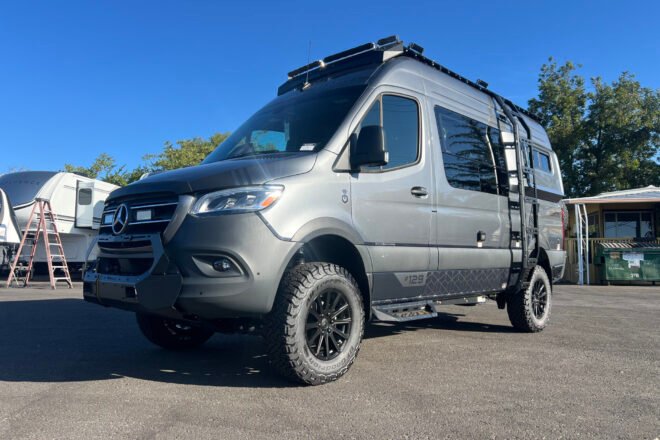
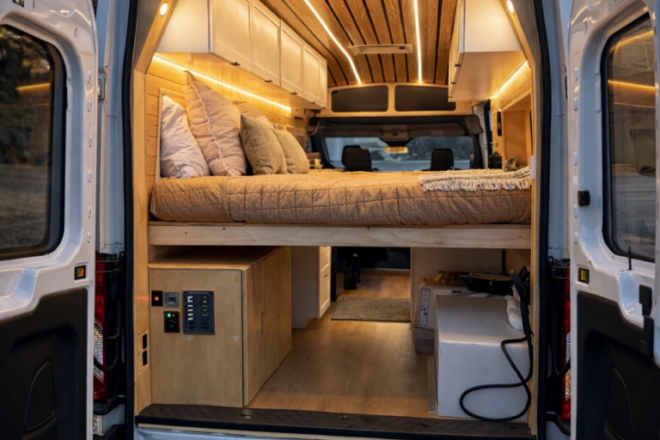
Haven by Emery Custom Builds – 2023 Ford Transit Extended High Roof
California's camper van market is one of the most active in the country, and the range of terrain here rewards buyers who approach the purchase seriously. The challenge is not finding a van — it is finding one built for California's specific combination of conditions rather than a generic conversion that photographs well but underperforms on a three-week coastal-to-desert circuit. Browse all camper van inventory on RVenture Trader and filter by the build specs that match your routes.
What California's Range of Conditions Actually Requires From a Van
California is not one climate. The Pacific coast runs cool and damp year-round, moderated by marine layer fog that persists through summer mornings and evenings. The Central Valley and Mojave push triple-digit heat from June through September. The Sierra Nevada requires cold-weather capability in spring and fall shoulder seasons. A van that handles all of these conditions is a deliberately built van — not just an expensive one.
The Coast, Marine Layer, and Salt Air
The marine layer brings persistent low-level moisture to coastal California from roughly May through August, particularly from the Bay Area northward and along stretches of Southern California's coast. This is not the oppressive humidity of the Deep South, but condensation inside a poorly ventilated van parked overnight along the PCH accumulates faster than most buyers expect. The practical fixes are straightforward when the van is built correctly from the start.
- Sealed insulation: Closed-cell spray foam or vapor-barriered rigid board prevents moisture migration through the metal skin into interior wall cavities — the starting point for any coastal California build.
- High-output roof ventilation: A quality roof fan running on exhaust mode overnight manages interior condensation before it reaches surfaces. This is the single most effective tool for coastal van camping without shore power.
- Window insulation panels: Cold glass surfaces are the most common condensation point in coastal vans. Fitted magnetic or friction-mount interior window covers eliminate the cold-side contact problem.
- Corrosion-resistant exterior hardware: Salt air accelerates oxidation on roof mounts, ladder hardware, and undercarriage components. Quality California-built conversions specify stainless or coated hardware throughout.
Desert Heat, Solar Gain, and Battery Performance
Death Valley, Joshua Tree, the Anza-Borrego Desert, and the Mojave push ambient temperatures into ranges where an unmanaged van interior becomes genuinely dangerous within an hour of stopping in direct sun. Desert-capable California builds treat heat management as a systems-level problem, not an afterthought.
- Radiant barrier insulation layer: A reflective barrier installed under the roof skin dramatically reduces solar heat gain — the primary driver of interior temperature spikes in full desert sun.
- Compressor refrigerator: Thermoelectric coolers fail to maintain safe temperatures when ambient heat exceeds 90°F consistently. A compressor fridge holds internal temperature regardless of what is happening outside.
- Lithium battery bank: Desert solar production in California is among the highest in North America. A properly sized lithium bank paired with 300W to 400W of panels can reach full charge before noon in July in the Mojave. Lead-acid chemistry degrades in sustained high-heat environments — lithium is the practical choice for serious California desert travel.
- Roof fan with rain sensor: Overnight desert temperatures can drop sharply, creating condensation even after extreme daytime heat. A fan with automatic rain and temperature response handles ventilation without manual adjustment through the night.
California averages more usable peak sun hours per day than almost any other state in the contiguous US. Buyers who prioritize off-grid range will find solar-optimized van builds especially well-matched to what California's climate can deliver year-round.
California Camper Van Pricing: What Each Budget Actually Gets You
Scroll right to see full table →
| Budget Tier | Interior Setup | Power & Water | Asking Price | Realistic Use Case |
|---|---|---|---|---|
| Under $40K | Convertible sleeping platform, basic storage, no dedicated cooking area | Minimal 12V setup, no solar, relies on shore hookup or portable power station | $20,000 – $40,000 | Two or three nights out at a time, sites with amenities nearby |
| $45K – $85K | Permanent sleeping area, functional cook station, dedicated refrigeration, roof fan installed | 200W–300W panels, lithium house battery, pressurized water with small holding tank | $45,000 – $85,000 | Week-long or month-long trips, working remotely, seasonal coastal or mountain use |
| $75K – $120K | Fully appointed kitchen, wet bath or dedicated shower compartment, grey tank, sealed thermal build throughout | 400W+ panels, expanded lithium capacity, inverter for household appliances, dual ventilation | $75,000 – $120,000 | Living out of the van for months at a time, extended desert or forest stays without returning to civilization |
| $100K and Up | Handcrafted cabinetry, full bathroom suite, auxiliary climate system, upholstered lounge area, external awning | 600W+ panels, oversized lithium bank, smart energy monitoring, diesel heater or auxiliary AC | $100,000 – $200,000+ | Permanent mobile residence, buyers who will not compromise on daily comfort regardless of location |
Build quality relative to climate demands is the variable that matters most in California's secondhand market — more than year, more than mileage, more than brand. A van priced low but missing the thermal and moisture systems California requires will absorb that cost in upgrades. Always ask for documentation on insulation method, battery chemistry, and solar installation before making an offer.
Sprinter and Transit: How Each Platform Fits California Travel
Both major conversion platforms perform well in California when the build is correctly specified. The decision comes down to how you intend to use the van and which California routes are central to your plans.
The Mercedes-Benz Sprinter high-roof remains the dominant platform for full-time and extended travel builds. The interior volume gives converters room to include proper thermal systems, full kitchen setups, dedicated electrical compartments, and sleeping configurations that do not require furniture reconfiguration every night. For buyers planning year-round California van life — coastal winters, Sierra shoulder seasons, and desert summers — the Sprinter's build capacity handles the full scope. Explore Sprinter camper vans on RVenture Trader and review the build specs against the California feature checklist above.
Ford Transit builds offer competitive interior volume, a lower entry price, and strong parts availability across California's major metro areas and highway corridors — relevant when you are covering the full length of the state rather than staying within range of specialty Mercedes service centers. Transit conversions range from minimalist weekend rigs to fully outfitted off-grid platforms with expanded electrical systems, fixed beds, and moisture management built for coastal and desert use alike. View Transit camper vans that listed and filter by the build level and price range that fits your budget.
Where California Takes You and What Each Route Requires
California's destinations are not interchangeable from a van specification perspective. The right build for a year of Pacific Coast Highway camping is not identical to the right build for a Mojave-and-Sierra circuit, and buyers who understand this before purchase make better decisions.
- Pacific Coast Highway and coastal campgrounds: Marine layer moisture management, corrosion-resistant hardware, and strong ventilation matter more than solar capacity here. Coastal California is one of the most van-accessible road networks in the world, with established campgrounds and overnight-friendly infrastructure throughout.
- Joshua Tree and the Mojave: Solar performance is exceptional and off-grid stays of a week or more are realistic with a properly sized system. Heat management is the critical build priority. BLM land in the high desert allows dispersed camping across vast stretches accessible from well-maintained dirt roads.
- Sierra Nevada — Eastern and Western Approaches: Fall and spring shoulder seasons require cold-weather sleeping and heating capability. Passes close in winter and summer access is excellent. Forest service roads on the eastern side vary widely in condition and require adequate ground clearance.
- Redwood Coast, Northern California: Dense canopy, high rainfall in winter, and cooler year-round temperatures. Moisture management and heating capacity matter more in this region than solar output or desert heat tolerance.
- Los Angeles, San Francisco, San Diego — Urban Overnight: City-specific overnight parking ordinances vary. Stealth capability — discreet van exterior, quiet ventilation, no obvious van life accessories — is more relevant in urban California than anywhere else in the state.
Buyers planning multi-day backcountry routes well away from developed campground facilities will find vans fitted with shower and water systems significantly more practical for extended California dispersed camping than builds that depend entirely on campground amenities.
Why RVenture Trader Is the Right Platform for California Buyers
California's camper van market moves quickly and prices vary widely for vans that appear similar on the surface. The difference between a genuinely California-capable build and one that simply looks capable is in the conversion details — insulation method, battery chemistry, refrigeration type, and moisture management systems. RVenture Trader is built specifically to surface those details.
- Every listing includes conversion specifications alongside the base vehicle information — not just make, model, and mileage
- Filter by features that determine California performance: solar capacity, insulation type, battery system, water storage, roof ventilation
- Both private sellers and professional conversion builders list on the platform, covering every price point from entry-level weekenders to fully outfitted off-grid rigs
- No algorithm-driven promoted placement distorting what appears first — inventory is organized by specification and relevance
- Seller accountability is built into the platform structure, with full build documentation expected on professional listings
Frequently Asked Questions
California's range of environments means no single feature defines a capable van, but the combination that covers the most ground is: sealed closed-cell insulation, a compressor refrigerator, a lithium battery bank with 300W or more of solar, a high-output roof fan, and radiant barrier material under the roof skin. A van with these five systems in place will perform on the coast, in the desert, and in the mountains across most of the year without requiring workarounds or additional investment after purchase.
Yes, through several different mechanisms. BLM land in California — concentrated in the high and low desert regions, the Eastern Sierra, and parts of Northern California — allows dispersed camping for up to 14 consecutive days in a single location at no cost. National Forest land follows similar rules with some fire restriction and permit requirements during high-risk periods. Developed state campgrounds and many National Park sites charge standard fees. Urban overnight parking is governed by city ordinances and is more restricted in Los Angeles, San Francisco, and San Diego than in smaller cities and towns along the coast.
Full-time van dwelling is legal in California with a thoughtful location strategy. The most sustainable approaches combine BLM and National Forest dispersed camping with state park campgrounds, private campground memberships, and rotational urban parking where city ordinances permit. California has no statewide ban on living in a vehicle, but major cities enforce varying restrictions on overnight residential vehicle use, particularly in residential neighborhoods. Most full-time California van lifers operate on a rotation that keeps them moving between legal overnight options rather than staying fixed in a single urban location.
A standard 144-inch or 148-inch wheelbase high-roof van — Sprinter 144 or Transit medium-roof equivalent — covers the widest range of California situations. It handles PCH pullouts, developed campground size restrictions, urban parking structures, and most forest service roads without the access limitations that come with extended-body or long-wheelbase configurations. Long-wheelbase builds offer more interior room and suit buyers prioritizing living space over access flexibility. If your California routes include tight coastal town parking or older campground loops not sized for large vehicles, the standard wheelbase is the more practical starting point.
California is one of the strongest solar environments in the country. A 300W to 400W panel array paired with a 200Ah lithium battery bank handles daily energy needs comfortably across most of the state for most of the year. The Mojave and high desert regions deliver exceptional solar production even in winter. The coast and Northern California redwood zones see more overcast days, particularly in the marine layer months of May through August, where a shore power inlet provides a practical backup. For full-time year-round van living across all California regions, 400W or more of panels and a larger battery bank of 200Ah to 300Ah provides the buffer needed for low-production days without adjusting routines.
Prioritize the following inspection points before committing to any used California camper van: roof seams and roof-mounted equipment penetrations for signs of water intrusion, the solar array condition and battery bank health including cycle count on lithium systems, the subfloor and lower wall panels for any moisture damage or delamination, the quality and documentation of the electrical system wiring, the undercarriage for rust or damage on vans with off-road history, and the chassis service records for timing belt or chain service, DEF system health on diesel platforms, and recent brake and suspension work. A pre-purchase inspection by an independent mechanic familiar with conversion builds is worth the cost on any van above $40,000.