
 souvik
Camper Van Insulation: Best Materials, R-Values and Costs for Every Climate (2026)
By the RVenture Trader team
Short answer: The best camper van insulation depends on climate. Thinsulate suits walls and ceilings, XPS suits floors and cold, and closed-cell spray foam suits extreme cold. A DIY van can often be insulated for around $1,000, but air sealing and ventilation matter as much as R-value.
Camper van insulation decides whether your van is comfortable at 20°F and 95°F, and whether condensation turns the walls into a science experiment. This guide compares the main materials by R-value, cost and moisture behavior, then shows which mix fits each climate.
Camper Van Insulation Materials Compared
| Material | R-value per inch (approx.) | Approx. cost | Moisture behavior | Best for |
|---|---|---|---|---|
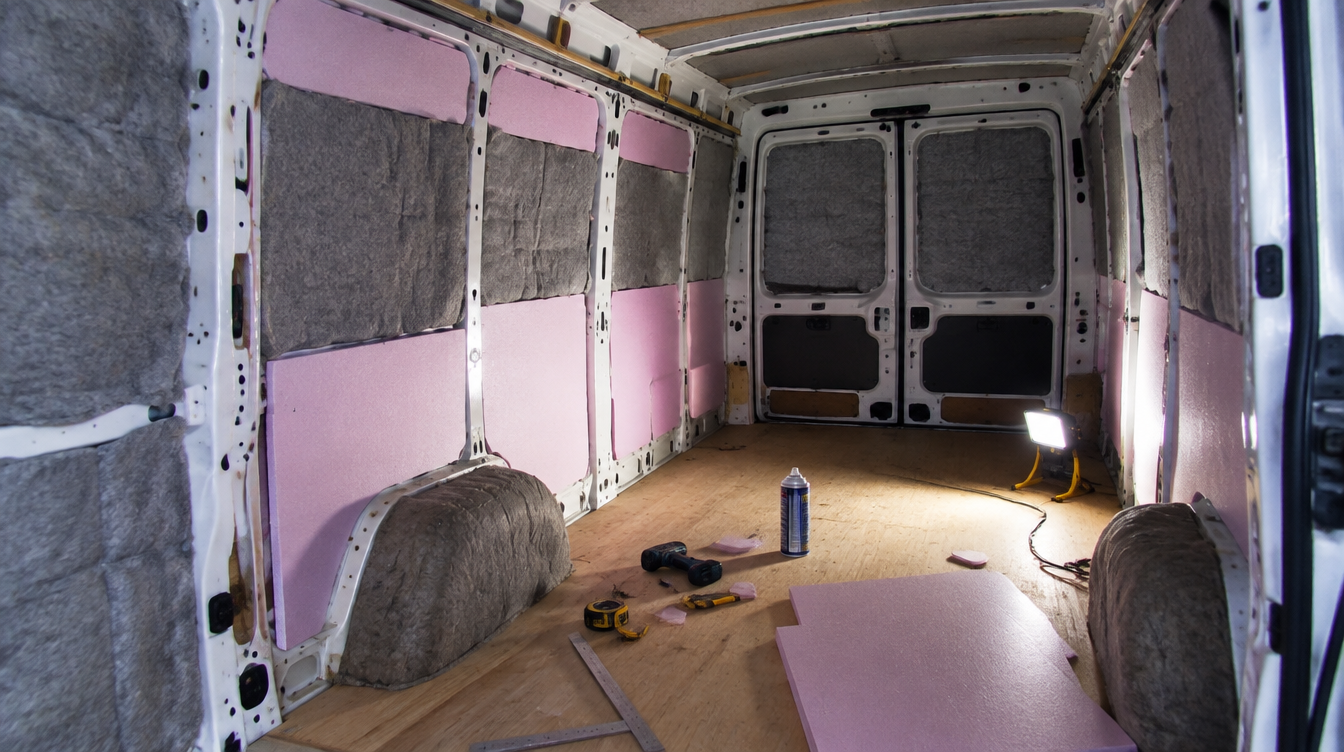
| 3M Thinsulate | About 3.3–3.4 | About $1.10 per sq ft per inch | Hydrophobic, dries out | Walls, ceiling, tight cavities |
| Polyiso foam board | About 5.8–6.5, drops in cold | About $0.70 per sq ft per inch | Foil-faced boards resist moisture | Hot and mild climates |
| XPS foam board | About 5 | About $0.42–$1.00 per sq ft | Closed cell, steady in cold | Floors and cold-weather builds |
| Closed-cell spray foam | About 6–7 | About $1.20 per sq ft per inch DIY, more for a pro | Air and vapor barrier | Extreme cold, professional install |
| Sheep wool (Havelock) | About 3.6 | About $1.50 per sq ft per inch | Buffers moisture, breathable | Four-season, breathable builds |
| Mineral wool | About 4 | About $0.80 per sq ft per inch | Needs moisture management | Budget cavity fill |
R-values and prices are rounded from Everywhere With Claire’s insulation comparison and builder guides, and they vary by brand and supplier. The cheapest way to buy warmth is usually foam board, which costs the least per unit of R-value. Thinsulate costs more but handles moisture and fits curved ribs.
Best Camper Van Insulation by Climate
| Climate | Good mix | Watch out for |
|---|---|---|
| Hot or humid | Thinsulate or closed-cell spray foam, plus reflective window covers | Foam board that traps moisture against metal |
| Cold or winter use | XPS or closed-cell spray foam, with Thinsulate in cavities | Polyiso losing R-value in low temperatures |
| Four-season travel | Hybrid: foam on floors, Thinsulate or wool in walls and roof | Gaps and thermal bridges at the ribs |
| Weekend use only | Thinsulate on walls and ceiling, XPS under the floor | Over-spending on insulation you will not need |
What Matters More Than R-Value
Raw R-value only tells part of the story. Air sealing, ventilation and thermal bridging decide how warm and dry the van feels. The US Department of Energy’s insulation guide explains how R-value works and why gaps reduce performance. In a van, those gaps appear at ribs, doors and window openings. Cut the metal first, then insulate, because leaks become slow hidden problems once walls go in, as GearJunkie’s build sequence guide notes.
- Apply sound deadening to bare metal before insulation, since cargo vans are loud
- Install a roof vent fan and plan passive airflow to reduce condensation
- Cover windows and the cab with insulated covers, because glass loses heat fastest
- Seal door seams and cable pass-throughs
- Keep insulation off the floor sleepers where water can collect
How Much Does Camper Van Insulation Cost?
A basic DIY van can often be insulated for around $1,000 or less. The Far Out Ride DIY cost log shows Thinsulate running roughly $750 to $1,050 in two Transit builds, plus about $100 for floor insulation. Professional spray foam costs more and is permanent. For the full budget, see our van conversion cost guide and the step-by-step cargo van conversion guide.
Insulation, Heating and Cooling Work Together
Good insulation lowers the load on both your heater and air conditioner. Pair it with the right heat source using our guide to heating a camper van, and read our camper van air conditioner guide before sizing a cooling system. If you are buying rather than building, browse vans with poptops and camper vans for sale, then ask each builder what insulation they used.
Frequently Asked Questions
What is the best insulation for a camper van?
There is no single best choice. Thinsulate suits walls and ceilings, XPS suits floors and cold climates, and closed-cell spray foam suits extreme cold when professionally applied.
What is the cheapest way to insulate a camper van?
XPS foam board usually gives the most R-value per dollar, while polyiso is also cheap but loses R-value in cold weather.
Does a camper van need a vapor barrier?
Moisture control matters in every van. Closed-cell foam acts as a vapor barrier, while Thinsulate and wool manage moisture differently, so pair any choice with ventilation.
How thick should camper van insulation be?
Most walls have limited depth, so builders use whatever fits behind the paneling and focus on sealing gaps and bridges.
Is spray foam good for a camper van?
Closed-cell spray foam performs very well and seals gaps, but it is permanent and expensive to install, so many DIY builders choose other materials.
Want a van that is already insulated? Browse camper vans for sale from verified builders and ask for the insulation spec before you buy.
R-values and prices are approximate and vary by product, supplier and installation. Check manufacturer data before buying. General information, not professional building advice.