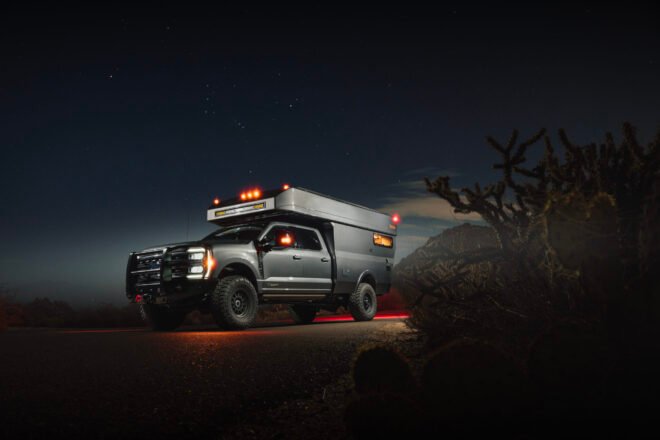
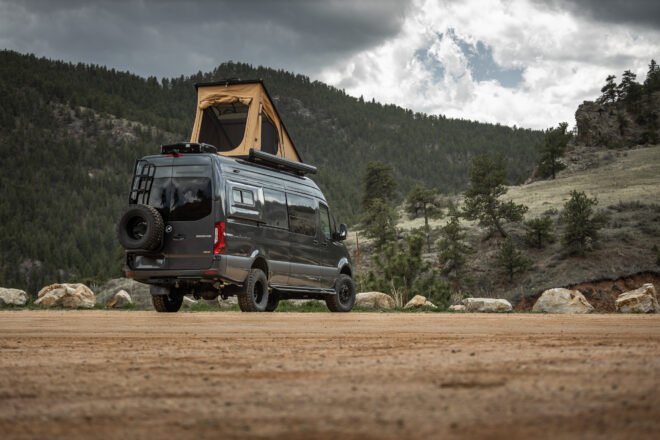
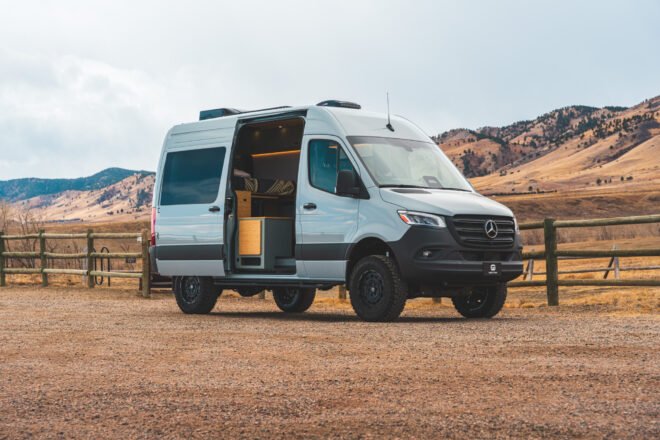
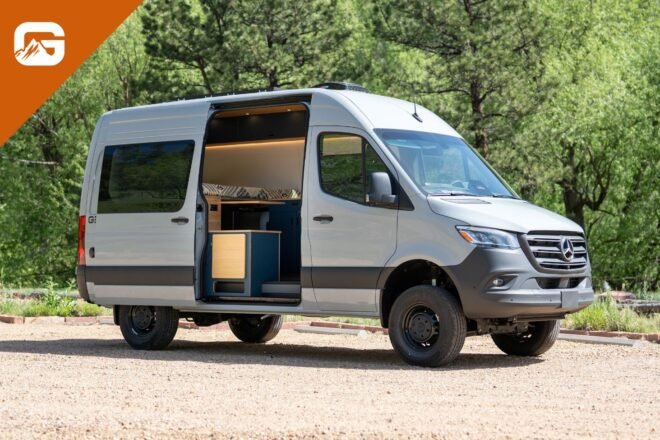
Colorado demands more from a camper van. Whether you’re headed to Telluride, threading through Rocky Mountain National Park, or spending months on a high-altitude dispersed camp, your van needs to be built for altitude, cold, and rough terrain — not just weekend aesthetics. Browse Colorado-ready camper vans on RVenture Trader: AWD/4×4 builds, diesel-heated interiors, thermal insulation, and mountain-proven platforms.
Most camper van listings on generic marketplaces are built for mild climates — three-season builds that look the part but fall apart the moment you hit a January morning in Telluride or Breckenridge. Colorado buyers need to think differently. The elevation, rapid weather shifts, and year-round snow access across the Rockies create a distinct checklist that flat-state buyers simply do not face.
Whether you are shopping for a weekend ski-season escape or a permanent mobile base for Rocky Mountain living, the right build starts with understanding what Colorado actually demands from a vehicle. Start your search with camper vans for sale on RVenture Trader — every listing is a converted build, not a stripped cargo van dressed up for a photo.
Colorado-Specific Features That Actually Matter
Before you shortlist any listing, these are the non-negotiable build characteristics for four-season Colorado van travel:
Diesel or propane forced-air heating: A Webasto or Espar diesel heater keeps interior temps livable at altitude without draining your battery bank overnight.
AWD or 4x4 drivetrain: Forest roads, ski areas, and mountain passes demand traction. Rear-wheel-drive cargo vans are a liability in February.
Thermal insulation (R-13 or higher): Spray foam combined with rigid board insulation prevents condensation, retains heat, and reduces heater runtime significantly.
All-season or winter tires: Several Colorado counties enforce traction laws from September through May — compliance is not optional.
Lithium battery bank (200Ah+): Cold weather degrades standard AGM batteries fast. Lithium holds charge in freezing temps and charges more efficiently from solar.
High-clearance suspension: Access to dispersed camping in Pike, San Isabel, or Arapaho National Forests often requires 8 to 10 inches of ground clearance minimum.
Condensation-resistant ventilation: A roof fan with a rain cover allows airflow even during snowfall, controlling interior moisture from cooking and overnight breathing.
Sprinter vs Transit: Which Platform Suits Colorado?
The two most popular conversion platforms each bring a distinct set of strengths for mountain travel. Here is a direct comparison to help you decide before you browse listings:
Scroll right to see full table →
Feature
Mercedes Sprinter (4x4)
Ford Transit AWD
Drivetrain Option
4x4 with low-range transfer case
AWD (intelligent torque distribution)
Ground Clearance
9.5 inches (factory 4x4)
~8.1 inches
Engine Type
3.0L V6 diesel or 2.0L gas
3.5L EcoBoost V6 gas
Cold-Weather Start Reliability
Excellent (glow plugs, block heater compatible)
Very Good (EcoBoost handles low temps well)
Interior Standing Height (High Roof)
Up to 6'4"
Up to 6'3"
Insulation Buildout Compatibility
Excellent (ribbed walls suit spray foam)
Very Good (flat panels, straightforward install)
Typical Converted Price Range
$55,000 – $175,000+
$45,000 – $120,000
If the Sprinter platform is your preference, browse dedicated Sprinter camper vans for sale with 4x4 drivetrains, professional insulation packages, and full off-grid builds already configured for Colorado conditions. If the Transit's lower price point and gas-engine reliability appeal more to your situation, the Transit camper van listings include AWD builds with complete electrical and kitchen setups ready for mountain travel.
What to Budget for a Colorado-Ready Camper Van
Colorado-capable builds carry a premium over standard three-season conversions due to the additional components required. Here is a realistic pricing breakdown by tier:
Entry-level ($28,000 – $55,000): Older Sprinter or Transit chassis with basic insulation, a bed platform, and a simple electrical setup. Functional for three-season use with a diesel heater added.
Mid-range ($55,000 – $95,000): Professional conversions with lithium systems, diesel heat, quality cabinetry, and running water. Suitable for year-round use across most Colorado conditions.
Premium ($95,000 – $175,000+): Full four-season capability, 4x4 drivetrains, 400Ah+ lithium systems, heated floors, interior shower, and high-end finishes built for serious off-grid living.
Budget additionally for a winter tire swap ($800 – $2,000) and diesel heater installation ($1,200 – $2,500) if the listing you choose does not already include them.
Matching Your Van to How You Actually Use It
Families Traveling Colorado Together
Colorado family travel in a van requires more than just extra sleeping space. You need flexible seating for long drives between national parks, sufficient storage for gear, and a layout that functions when everyone is stuck inside on a rainy alpine afternoon. Browse camper vans for family with bunk configurations, convertible rear seating, and larger cargo capacity designed for family routines rather than solo minimalism.
Remote Workers and Long-Term Van Lifers
Colorado has become one of the top remote-work van life destinations in the country. Reliable cellular coverage in towns like Boulder, Fort Collins, and Durango, combined with vast surrounding public land for dispersed camping, makes it viable to work from the van full-time. If a dedicated workspace is part of your requirement, the platform also carries work vans with organized interior layouts that transition between professional use and travel without compromise.
Where Colorado Van Travelers Actually Go
Knowing the terrain narrows your build requirements before you commit to a listing:
Rocky Mountain National Park (Estes Park): Paved access year-round, but expect crowds. High-roof vans fit most designated campsites. Advance reservations required May through October.
San Juan Mountains (Ouray, Silverton, Telluride): Among the most dramatic scenery in the country and among the most demanding roads. 4x4 and high clearance are essential for backcountry access on Engineer Pass or Black Bear Road.
Pike and San Isabel National Forests: Extensive dispersed camping with forest roads that reward AWD or 4x4 vans and a 14-day stay limit per location.
Grand Junction and Western Slope: Desert canyon terrain, milder winters, and excellent BLM access. A well-insulated van handles warm days and cold nights comfortably across all four seasons.
Steamboat Springs and Routt National Forest: Premium skiing access in winter and high alpine trails in summer. Expect snowpack from October through April.
Why Colorado Buyers Use RVenture Trader
Generic classified platforms mix cargo vans, passenger vans, and unfinished DIY projects into one unfiltered list. RVenture Trader is built specifically for the converted van market — every listing is a purpose-built camper with documented features, not a gutted panel van with a mattress on the floor.
Conversion-specific inventory: Every listing on the platform is a converted build — filtered by platform, layout, features, and sleeping capacity so you spend less time eliminating irrelevant results.
Detailed build specs: Listings include power system specs, insulation type, drivetrain, and sleeping capacity — the information Colorado buyers actually need to make a purchase decision.
Buyer-focused categories: Whether you need a four-season off-grid build, a family layout, or a remote-work setup, the platform organizes inventory around how buyers actually search.
All conversion types in one place: From budget-friendly entry builds to fully appointed luxury rigs — the full range is searchable from RVenture Trader's conversion van marketplace without switching between platforms.
Frequently Asked Questions: Colorado Camper Van Buyers
Not for every trip — but for serious backcountry access, 4x4 or AWD is strongly recommended. Paved mountain roads and major ski resorts are accessible in reasonable conditions without it, but dispersed camping on forest roads and winter travel to remote areas require traction capability. If you plan to camp outside designated campgrounds from October through April, prioritize AWD or 4x4 in your search.
A diesel forced-air heater — either Webasto or Espar — is the most reliable option for cold-weather van life in Colorado. These units burn diesel from a dedicated tank or tapped from the main fuel supply, produce consistent heat without significant battery drain, and operate effectively well below 0°F. Propane catalytic heaters work as a backup but lack the sustained output for overnight use at high altitude. Avoid relying on electric heating alone unless your lithium bank is 400Ah or larger with consistent solar input.
A properly equipped van for Colorado four-season use typically starts around $55,000 for a professional mid-range conversion and can exceed $150,000 for a premium all-terrain build with 4x4, full lithium system, and high-end interior finishes. Entry-level builds in the $28,000 to $55,000 range can work for three-season travel with some upgrades. Budget separately for winter tires ($800 to $2,000) and a diesel heater installation ($1,200 to $2,500) if the listing does not include them.
Yes. Dispersed camping on most national forest land in Colorado is legal under USFS rules, subject to a 14-day stay limit per location and minimum distance requirements from water sources and roads — typically 100 to 200 feet. Some areas have specific seasonal closures or fire restrictions. A high-clearance AWD or 4x4 van significantly expands access to dispersed sites that standard two-wheel-drive vans cannot safely reach. Always check with the local ranger district before your trip.
The Mercedes Sprinter 4x4 offers a genuine low-range transfer case, higher factory ground clearance, and stronger off-road capability than the Ford Transit AWD. It also has a longer track record as a conversion platform with more professional builders specializing in it. The Transit AWD is a strong alternative at a lower price point, with a reliable EcoBoost V6 that handles altitude well. For the most demanding Colorado terrain, the Sprinter 4x4 has a clear edge. For standard mountain travel with occasional backcountry access, the Transit AWD performs well and typically costs $10,000 to $30,000 less for comparable builds.
Yes. Full-time Colorado van life requires a build with four-season insulation, a reliable heating system, a sufficient power bank for cloudy winter days, and a drivetrain that handles variable road conditions. RVenture Trader carries listings specifically built for extended off-grid living — not just weekend use. Filter by features including diesel heaters, lithium electrical systems, and AWD or 4x4 drivetrains to narrow to builds that meet the standard Colorado demands year-round.