

 souvik
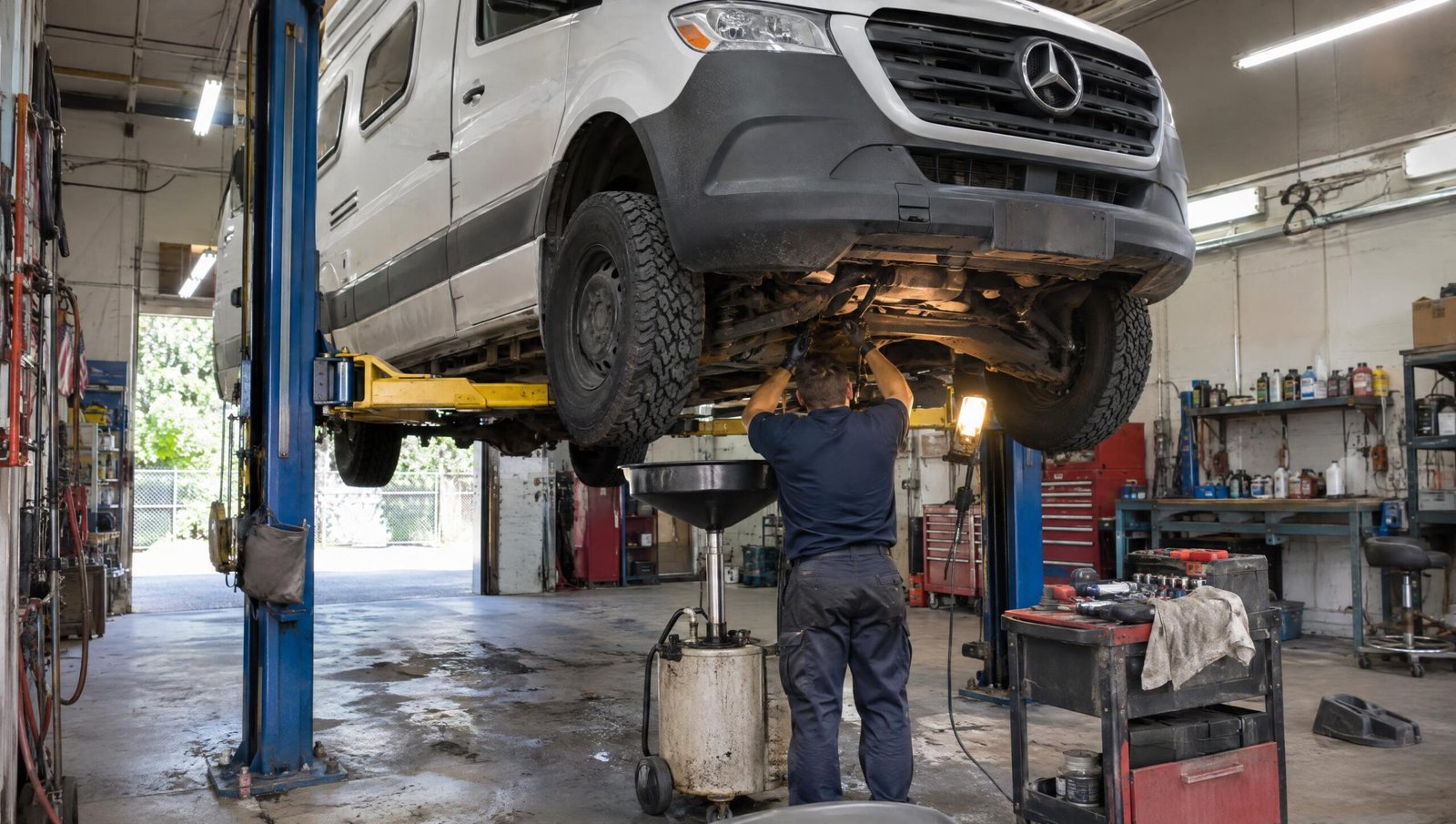
Camper Van Maintenance Cost: What to Budget Each Year (2026)
By the RVenture Trader team
Short answer: Plan on a camper van maintenance cost of $1,000 to $3,000 a year for a van driven 10,000 to 15,000 miles. Gas Transits and ProMasters sit at the low end. Diesel Sprinters cost more per visit. Tires, brakes and the house systems add lumpy bills every few years.
The sticker price is the loud number. Maintenance is the quiet one, and it is the one that decides whether you still like your van in year five.
A camper van has two maintenance lists. One belongs to the chassis: oil, filters, brakes, tires. The other belongs to the house: roof seals, batteries, water system, heater. Owners who budget only for the first list get surprised by the second.
Yearly Maintenance Cost by Chassis
These are typical ranges at dealers and independent shops in the US. Prices shift by region, and a mobile mechanic in a small town may beat them easily.
| Item | Mercedes Sprinter (diesel) | Ford Transit (gas) | Ram ProMaster (gas) |
|---|---|---|---|
| Oil and filter service | $250–$450 | $80–$150 | $80–$150 |
| Larger scheduled service | $600–$1,000 | $250–$500 | $250–$500 |
| Fuel filter | $150–$350 | Rarely needed | Rarely needed |
| DEF fluid, per year | $50–$150 | None | None |
| Brakes, per axle | $450–$900 | $350–$700 | $350–$700 |
| Set of tires | $1,000–$1,800 | $800–$1,400 | $800–$1,300 |
| Typical yearly total | $1,500–$3,000 | $1,000–$2,000 | $1,000–$2,000 |
Service intervals differ by model year and engine, so follow the maintenance booklet for your VIN. Recent diesel Sprinters allow long intervals between services. Plenty of owners still change oil sooner, especially with a heavy build and lots of mountain driving. The official schedules are on the Mercedes-Benz Vans and Ford owner sites.
Looking at a specific model? Our Ram ProMaster camper van guide and Ford Transit camper van guide cover the known weak spots for each.
The House Side: Costs People Forget
- Roof sealant: inspect twice a year, touch up as needed. A $20 tube prevents a $2,000 ceiling repair.
- Lithium batteries: little upkeep, but budget $2,000 to $6,000 for eventual replacement after roughly 10 years.
- Diesel or gasoline air heater: a clean-out or service kit every couple of years, about $50 to $300.
- Water system: sanitize each season, replace filters, check for weeping fittings.
- Roof fan and AC: clean screens and filters, check mounting bolts.
- Fridge: vacuum the vents and coils once a year.
- Propane: leak test whenever you change a fitting, and keep detectors in date.
Most of this is cheap if you do it yourself and expensive only when ignored.
What Owners Tell Us After a Few Years
Three themes come up again and again when sellers describe their ownership history.
First, diesel emissions parts. Sensors and related components on modern diesels can fail outside warranty, and a single repair can run from several hundred dollars to a few thousand. Vans that mostly do short trips seem to suffer more, because the exhaust system never gets hot enough for long enough. Regular highway runs help.
Second, tires wear faster than people expect. A fully built van sits near its weight limit all the time, unlike a delivery van that runs empty half the day. Rotate every 5,000 to 7,500 miles and check pressures cold. The NHTSA tire safety page explains load ratings and age limits clearly.
Third, small leaks. Almost every water damage story starts with “I noticed a little drip and meant to deal with it.”
A Simple Seasonal Checklist
Spring
- Sanitize the water system and check every fitting
- Inspect roof seals around fans, solar mounts and racks
- Check tire age, tread and pressure
- Test smoke, CO and propane detectors
Before a long trip
- Oil level, coolant, brake fluid and DEF
- Wiper blades and all exterior lights
- Torque the wheel lugs if tires were recently off
- Run the heater and the AC for ten minutes each
Fall
- Drain or winterize plumbing if the van will sit in freezing weather
- Wash the underbody and look for rust starting at seams
- Top off batteries and set a storage charge routine
How to Keep Costs Down
- Find an independent shop that knows your chassis before you need one
- Learn the easy jobs: air filters, cabin filters, wiper blades, sealant
- Do not skip scheduled services to save money. Deferred work costs more later and hurts resale
- Keep every invoice. A thick folder adds real value when you sell
- Check for open recalls twice a year
For the full picture of running costs, including fuel, insurance and camping fees, see our van life cost per month breakdown. If you are shopping used, the used Sprinter problems checklist lists what to inspect before you pay.
Frequently Asked Questions
How much does it cost to maintain a Sprinter camper van per year?
Most diesel Sprinter owners spend $1,500 to $3,000 a year on routine maintenance at typical mileage. Emissions system or suspension repairs on older vans can push a single year higher.
Is a Ford Transit cheaper to maintain than a Sprinter?
Usually yes. Gas Transit parts and labor cost less, and far more shops will work on one. Fuel economy is lower, which offsets part of the saving.
How often should a camper van be serviced?
Follow the factory schedule for your model year, and add a house-systems check at least twice a year. Heavy builds and dusty or mountain driving justify shorter oil intervals.
How long do camper van tires last?
Commonly 30,000 to 50,000 miles, though all-terrain tires on a heavy van can wear sooner. Replace tires at six to ten years regardless of tread.
Can any mechanic work on a camper van?
Most shops can service a Transit or ProMaster chassis. Sprinters are best taken to a Mercedes van dealer or an independent Sprinter specialist. House systems are usually handled by upfitters or RV technicians.
Shopping With Maintenance in Mind
A van with records is worth more than a van with promises. Browse Transit camper vans for sale and Sprinter camper vans for sale, and ask every seller for the service file before you travel to see it.