
 souvik

Camper Van Water System: Tank Sizes, Pumps, Heaters and Real Costs (2026)
By the RVenture Trader team
Short answer: A camper van water system needs four things: a fresh tank, a 12V pump, a grey tank and, if you want hot water, a heater. Most vans carry 20 to 40 gallons of fresh water. Two people who cook and wash dishes but skip daily showers use about 3 to 6 gallons a day, so a 30 gallon tank lasts close to a week.
Water is the part of a build people plan last and regret first. Solar gets the spreadsheets and the YouTube hours. Water gets a tank shoved wherever there was room left. Then the first long trip arrives and the tank runs dry on day three, forty minutes of washboard road from the nearest spigot.
We read a lot of listings on RVenture Trader, and the pattern holds up. Vans with a tidy, serviceable water setup sell with fewer questions. Vans with a mystery tank under the bed and no drain valve get the same buyer message again and again: “How do I empty this?”
How a Camper Van Water System Actually Works
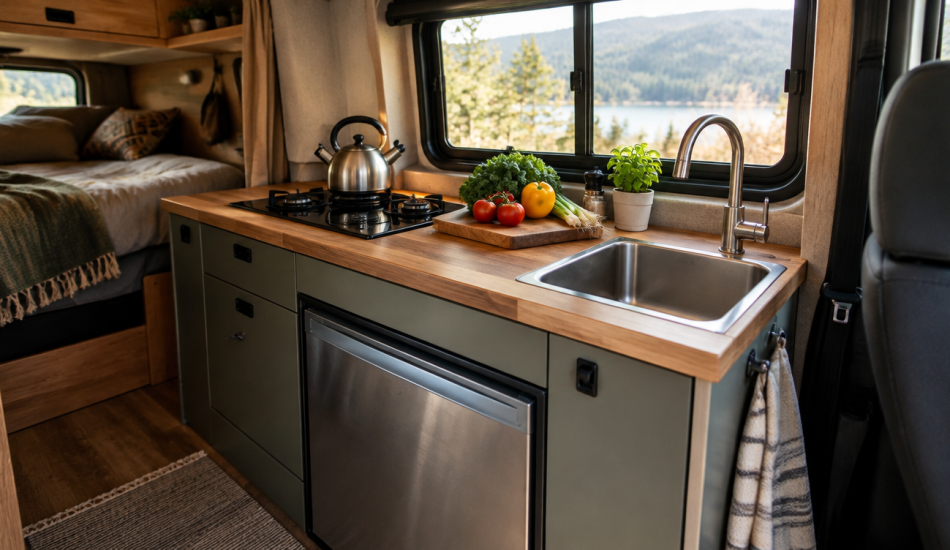
The layout is simpler than it looks in build videos. Water goes in through a fill port, sits in the fresh tank, and gets pushed to the taps by a small 12V pump that switches on when pressure drops. Used water runs down the drain into a grey tank or a portable jug.
- Fresh tank: food-grade polyethylene, usually mounted inside the van over or just ahead of the rear axle
- 12V diaphragm pump: around 3 gallons per minute is plenty for one sink and a shower
- Accumulator tank: optional, but it stops the pump from pulsing every time you crack the tap
- Water heater: electric, propane or diesel-fired hydronic
- Grey tank: catches sink and shower water, mounted under the floor or in a cabinet
- Filter: a sediment and carbon filter at the fill or under the sink
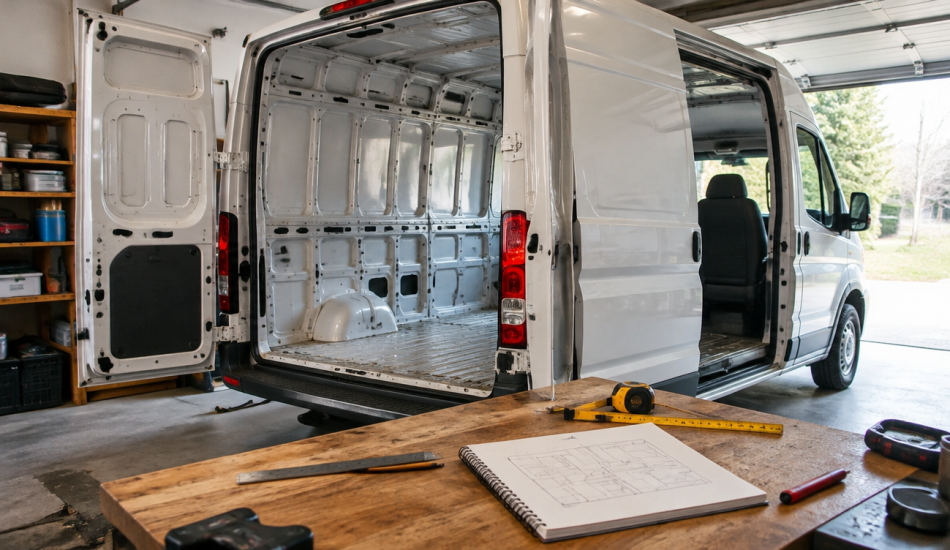
If you are still at the bare-metal stage, our cargo van conversion build order shows where plumbing fits between insulation and cabinetry. Run the lines before the walls close up. Everyone says it, and people still forget.
What Size Water Tank Do You Need?
Start with how you really live, not how you hope to. Then do the weight math, because water weighs 8.34 pounds per gallon and that adds up fast.
| Travel style | Fresh tank | Rough days for two | Water weight when full |
|---|---|---|---|
| Weekends, campground hookups | 10–16 gal | 2–3 | 85–135 lb |
| Mixed trips, some boondocking | 20–30 gal | 4–7 | 165–250 lb |
| Full-time, indoor shower | 35–50 gal | 5–8 | 290–415 lb |
A navy-style shower uses 2 to 3 gallons. A “normal” shower with the water left running can burn 8 or more. That single habit decides whether a 30 gallon tank feels generous or stingy.
Grey capacity matters as much as fresh. A common mistake is a 40 gallon fresh tank feeding a 7 gallon grey jug. Aim for a grey tank at least half the size of your fresh tank, more if the van has a shower. You can browse vans with an interior shower to see how professional builders balance the two.
Pumps, Heaters and What They Cost
| Component | Typical spec | Price range |
|---|---|---|
| Fresh tank | 20–40 gal | $80–$300 |
| 12V pump | 3 GPM, 45–55 PSI | $70–$200 |
| Accumulator | 0.75 L | $40–$60 |
| Electric water heater | 4–6 gal, 120V | $200–$500 |
| Propane tankless heater | On demand | $250–$700 |
| Diesel hydronic (heat and hot water) | Combined unit | $1,500–$3,000+ |
| Grey tank | 10–25 gal | $80–$250 |
| PEX, fittings, filter, valves | Whole van | $150–$400 |
A basic cold-water system comes in around $300 to $600 in parts. Add hot water and a shower and you are closer to $1,200 to $3,000, depending on the heater.
Which water heater makes sense?
Electric tank heaters are cheap and quiet, but they lean hard on the battery bank. Read our camper van electrical system guide before you commit to one. Propane tankless units give endless hot water and need proper venting. Diesel hydronic systems cost the most and make the most sense in cold-weather builds that already have a diesel heater, since they sip from the same fuel tank.
The Lessons Owners Learn the Hard Way
These are the complaints we hear most from people selling or trading up, roughly in order of frequency.
- No low-point drain. Without one you cannot fully empty the lines before a freeze. A $12 valve saves a cracked fitting.
- Tank you cannot reach. If cleaning the tank means removing the bed, it will not get cleaned.
- No way to see the level. Even a simple sight tube beats guessing.
- Exterior tanks in cold climates. Underslung tanks freeze first. Winter travelers keep fresh water inside the insulated envelope. Our winter camper van guide covers this in detail.
- Cheap pump, loud nights. A pump screwed directly to plywood sounds like a drill at 2 a.m. Rubber mounts fix it.
One more, and it is less glamorous. Sanitize the system. The long-standing RV rule of thumb is a quarter cup of plain household bleach for every 15 gallons of tank capacity, left to sit for a few hours and then flushed until the smell is gone. Do it at the start of each season and after the van has been parked for a while. The EPA’s drinking water guidance is worth a read if you fill from unknown sources.
Finding Water on the Road
Filling up is rarely hard once you know where to look. Campground spigots, many gas stations and truck stops, city parks, visitor centers and dump stations with a marked potable tap all work. Carry your own drinking-water hose, a pressure regulator for campground hookups and a water key for commercial spigots.
When you camp far from services, a spare 6 gallon jug gives you real margin. Our boondocking 101 guide has more on stretching supplies off grid.
Frequently Asked Questions
How long does 30 gallons of water last in a camper van?
For two people who cook, wash dishes and take quick rinses every couple of days, 30 gallons lasts about five to seven days. Daily showers cut that to three or four.
Do I need a grey water tank in a camper van?
Yes, in practice. Most campgrounds and public lands do not allow you to drain sink water on the ground, and a fixed or portable grey tank keeps you legal and keeps smells out of the van.
Can I drink water from my camper van tank?
You can if the tank and hoses are food grade, the system is sanitized regularly and you fill from potable sources. Many owners still add a carbon filter at the tap for taste.
How much does it cost to add a water system to a van?
A simple cold-water sink setup runs $300 to $600 in parts. A full system with hot water and a shower usually costs $1,200 to $3,000, plus labor if a shop installs it.
Where should the water tank go in a van?
Low and close to the rear axle, inside the insulated space if you camp in freezing weather. Keeping the weight low and centered helps handling.
Ready to Skip the Plumbing?
If designing a system from scratch sounds like more than you want to take on, look at builds where it is already sorted. Browse current camper vans for sale and filter for the tank sizes and bathroom setup that match your trips.