
 souvik
The Mobile Office Van: How to Build a Real Office on Wheels in 2026
A mobile office van is the remote worker’s answer to a question that coworking spaces never solved: what if your office could follow the work instead of the other way around? In 2026, a properly built van office delivers a fixed ergonomic desk, a lithium power bank that runs a full workday off-grid, layered internet that survives dead zones, and climate control that keeps both you and your equipment comfortable — all inside a vehicle you own outright and can park anywhere.
This guide covers the entire mobile office van conversion from first decision to first workday: which chassis to build on, the correct build order, how to size your power system, what internet setup actually holds a client call together, and what every tier costs in 2026 — whether you convert it yourself or buy a finished build from the verified mobile office vans for sale on our marketplace.
What Is a Mobile Office Van — And What It Isn’t
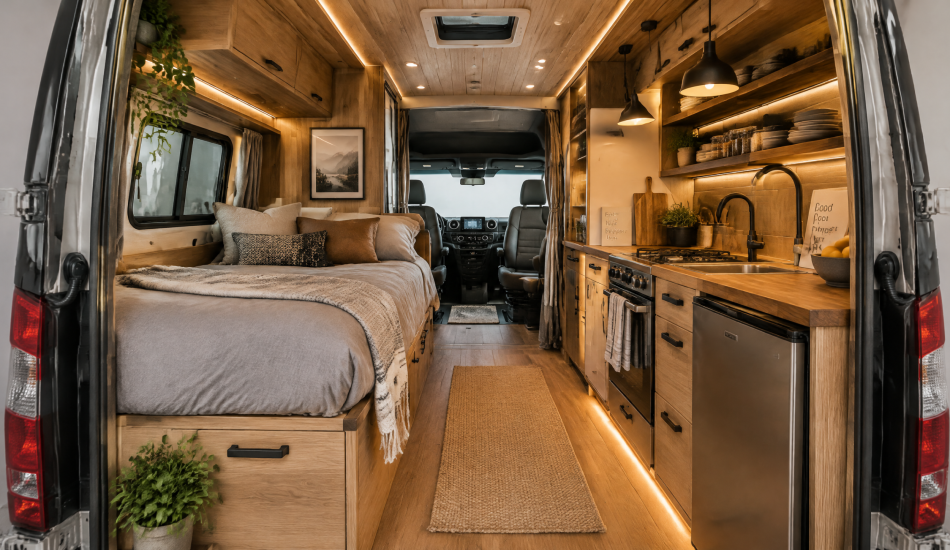
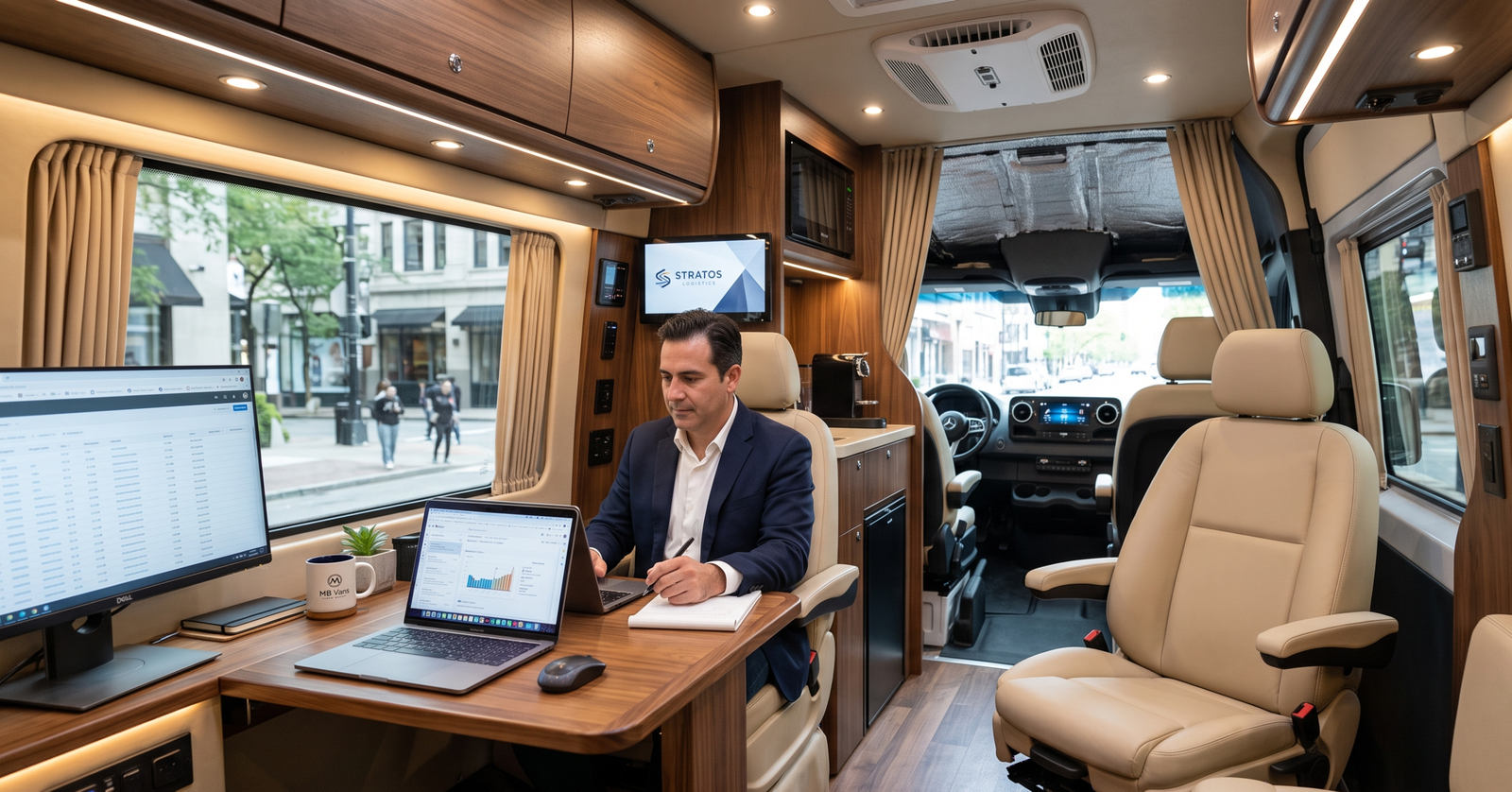
A mobile office van is a converted cargo van — most often a Mercedes Sprinter or Ford Transit — designed around work as the primary function, not camping. That single design decision separates a true office on wheels from a camper conversion with a laptop shelf bolted on. A camper build prioritizes the bed, the kitchen, and weekend comfort. A van office prioritizes the desk, the power system, and eight uninterrupted productive hours.
The features that define a real mobile office van:
- A fixed desk at proper working height — a permanent installation with vibration-resistant mounting, not a dinette table doing double duty
- 200Ah+ lithium battery capacity with solar charging — enough to power monitors, a router, and lighting through a full off-grid workday
- Full standing headroom in a high-roof configuration, so long sessions don’t destroy your posture
- Integrated connectivity infrastructure — roof antenna mounts, cable routing channels, and a dedicated router position built into the conversion
- Climate management — a diesel heater and roof vent fan (or mini-split) that protect sensitive electronics as much as the operator
- Glare-controlled LED lighting positioned for clean, professional video call backgrounds from any parking spot
- Lockable equipment storage that keeps the active workspace clear and gear secure in transit
If a listing calls itself a mobile office van but the “desk” folds out of a bed frame and the battery is a single AGM from 2021, it’s a camper — price it like one.
Van Life Jobs: Who Actually Works From an Office on Wheels?
Interest in van life jobs keeps growing for a simple reason — the list of professions that fit inside a van keeps growing. These are the working profiles we see most often among buyers browsing mobile office builds:
- Independent consultants and executive coaches — a private, professional-feeling space for client sessions and calls between locations, without renting a room in every city
- Content creators, video editors, and photographers — stable power for editing workstations, external monitors, and recording equipment away from a fixed studio
- Remote employees and digital nomads — a full-time workstation that replaced an office lease and relocates without notice
- Field service professionals and contractors — an administrative workspace alongside organized equipment storage, sitting close in spirit to a dedicated work van with office capability built in
- Small business operators — dispatch, scheduling, and client communication from a vehicle that doubles as a rolling brand presence
- Software developers and designers — the original van life jobs, still the most common: all you need is power, internet, and a screen that doesn’t wobble
The common thread: location-independent income plus a workspace requirement that a coffee shop can’t meet. Many full-timers pair their van office with free overnight options — boondocking on public land outside cities or discreet stealth camping inside them — and cut their fixed living costs to a fraction of rent.
Mobile Office Van vs Renting a Desk: The 2026 Math
Before committing to a conversion, run the numbers against what you’re paying now. The comparison is more lopsided than most people expect:
| Option | Typical Monthly Cost (2026) | 5-Year Cost | What You Own After |
|---|---|---|---|
| Dedicated coworking desk (major US metro) | $350–$600 | $21,000–$36,000 | Nothing |
| Small private office lease | $800–$1,500 | $48,000–$90,000 | Nothing |
| Mid-range mobile office van (financed) | $550–$900 loan payment | $33,000–$54,000 paid in | A van worth $35,000–$55,000 resale |
A financed mobile office van costs about the same per month as a private office — except at the end you own an appreciable asset instead of a stack of receipts, and the office was in a different national park every week. Run your own numbers in the RVenture Trader loan calculator.
Choosing the Chassis for Your Van Office
The chassis decides everything downstream — headroom, desk length, power capacity, driving range, and maintenance cost. Here’s how the three main platforms compare for a mobile office van conversion in 2026:
| Platform | Standing Height (High Roof) | Strengths for a Van Office | Watch Out For | Typical Base Van Cost |
|---|---|---|---|---|
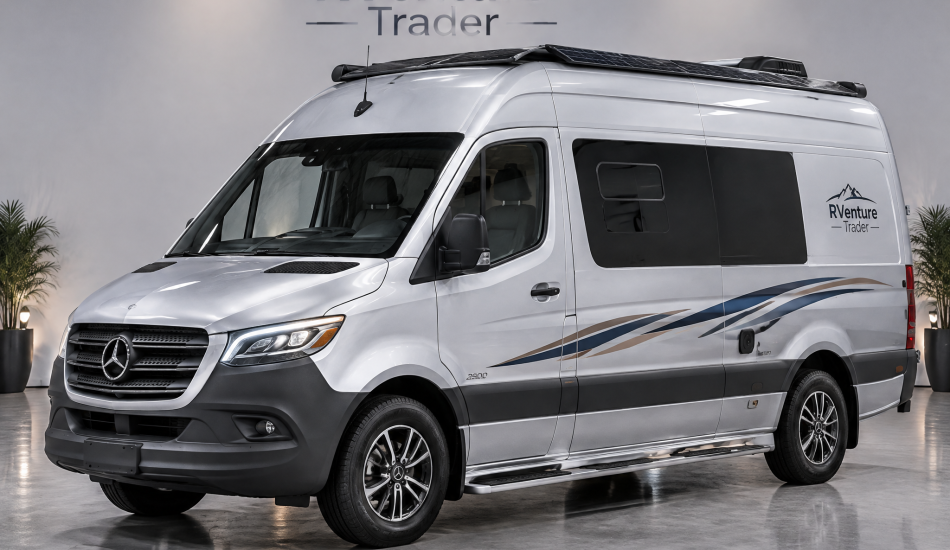
| Mercedes Sprinter | 6’4″ | Standing-desk headroom, diesel range, holds resale value best — the executive-build standard | Dealer-only repairs, emissions system costs | $50,000–$65,000 |
| Ford Transit | 6’5″ (extended) | Widest body for dual-monitor desk layouts, parts available everywhere, lower entry price | EcoBoost cam phasers at high mileage | $45,000–$55,000 |
| Ram ProMaster | 6’3″ | Most interior width per dollar — the budget DIY favorite | FWD components wear faster under conversion weight | $40,000–$50,000 |
Still deciding? Our full Sprinter vs Transit vs ProMaster comparison breaks down drivetrain, reliability, and resale in detail.
Wheelbase is not a detail — it’s the floor plan. A long wheelbase van adds 24–36 inches of usable floor length over standard: the difference between squeezing in a laptop shelf and fitting a full-width permanent desk, a secondary seat for client meetings, and lockable equipment storage in the same layout. A short wheelbase build still works well for a solo operator with a single-screen setup who parks in cities daily — it fits a standard parking space, which a 170″ Sprinter never will.

Mobile Office Van Conversion: The Right Build Order
Every clean mobile office van conversion follows the same sequence. Get it out of order and you’ll be pulling wall panels off in month three:
- Insulate and vapor-seal first. Temperature swings kill productivity and shorten electronics life. Insulation, sound deadening, and the roof fan cutout all happen before anything else goes in.
- Rough in the full electrical system. Battery bank location, inverter, solar wiring runs, DC-DC alternator charging, and every outlet — routed and labeled before the walls close. Amateur, unfused wiring is the #1 fire risk in DIY builds.
- Panel the walls and ceiling. With wiring channels documented so future you can find them.
- Build and mount the fixed desk. 28–30 inches high for seated work, deep enough for a monitor at arm’s length, with vibration-resistant hardware rated for washboard roads — not wood screws into thin plywood.
- Install connectivity infrastructure. Roof antenna mount, cable pass-throughs, a powered router shelf, and cellular booster position — integrated now, not retrofitted later.
- Fit climate control. Diesel heater for winter workdays, Maxxair roof fan for summer, and a mini-split if your battery bank can carry it.
- Finish with lighting and storage. Adjustable LED panels angled to kill screen glare and light your face for video calls, plus lockable compartments sized for your actual gear.
Budget 250–400 hours of labor for a mid-range DIY build. If your billable rate makes that math painful, skip to the pre-built mobile office vans section below.
Power System: How Much Battery Does a Van Office Need?
Power is where most DIY office builds fail — usually because they were sized for weekend camping loads, not a 9-to-5 of screens and routers. Size to your real daily draw:
| Work Setup | Approx. Daily Draw | Recommended Battery | Solar | Second Charge Source |
|---|---|---|---|---|
| Laptop + phone + lights | 600–900 Wh | 100–200Ah lithium | 200W | Optional |
| Laptop + dual monitors + 5G router | 1,200–1,800 Wh | 200–300Ah lithium | 200–400W | DC-DC recommended |
| Editing rig + lighting + Starlink | 2,500–3,500 Wh | 300–400Ah lithium | 400W+ | DC-DC required |
Three rules that save office builds: choose lithium over AGM (double the usable capacity at half the weight), add DC-DC alternator charging so every drive between parking spots refills the bank, and never size to your average day — size to your worst cloudy Tuesday with back-to-back video calls.
Internet: The System That Keeps an Office on Wheels Online
An office on wheels without reliable internet is just a parked van. The 2026 standard is a layered setup — never a single connection:
- Starlink Mini or Roam — near-universal coverage anywhere with open sky; budget 25–40W of continuous draw into your power math
- 5G cellular router with a roof-mounted external antenna — faster and lower-latency than satellite near towns, and your fallback when trees or canyons block the sky
- Cellular signal booster — turns one weak rural bar into usable bandwidth for calls and email
Run at least two of the three, on different failure modes. Client calls don’t forgive dead zones, and the $150/month combined cost is cheaper than one lost contract.
Video Calls From a Van: Lighting, Sound & Background
The fastest way to look unprofessional in a van office is a dark face, an echo, and a bed in the background. The fixes are cheap and mostly happen during the build:
- Key light position: an adjustable LED panel mounted at eye level in front of the desk — never rely on the window behind you
- Sound treatment: insulated walls plus fabric surfaces already kill most echo; add a directional USB mic and the van sounds better than most home offices
- Camera background: orient the desk so the camera faces a clean paneled wall or cabinet face, not the sleeping area — this is a layout decision, make it before the build
- Climate noise: diesel heaters and roof fans have quiet modes; know which speeds are call-safe before the interview that matters
Mobile Office Van Conversion Cost in 2026
Real numbers across the market, for both build paths:
| Build Level | DIY Conversion (parts only, + van) | Pre-Built / Professional (total) | Best Suited For |
|---|---|---|---|
| Entry-level office setup | $8,000–$15,000 | $18,000–$35,000 | Part-time remote work, single-screen use |
| Mid-range full-time build | $20,000–$35,000 | $35,000–$65,000 | Full-time freelancers, consultants, solo operators |
| Professional-grade conversion | $40,000–$60,000 | $65,000–$105,000 | Content producers, dual-screen and high-draw setups |
| Executive mobile office | Rarely DIY | $105,000–$160,000+ | Client-facing operations, production teams |
Where the money actually goes in an office build: roughly 35–40% to the electrical system, 20% to insulation and climate, 15% to the desk and cabinetry, and the rest to connectivity, lighting, and finish. For the wider pricing context — depreciation curves and monthly payment tables — see How Much Does a Camper Van Cost in 2026?, and if you’re financing, professional builds often qualify for 10–20 year RV loan terms; the full breakdown is in our camper van financing guide.
Buyers who want the workspace wrapped in premium living quarters should also compare against the executive-grade luxury van builds on the platform — several integrate a full office alongside high-end living systems.
Buying a Pre-Built Mobile Office Van: What to Verify
A used or pre-built van office gets inspected like any conversion — chassis first, build second — with three office-specific checks layered on top:
- Load-test the battery bank with the inverter powering a real draw (kettle or hair dryer) while the fridge runs — capacity claims mean nothing without a test
- Verify solar is producing live wattage on the charge controller in daylight, and confirm battery chemistry and purchase date with receipts — lithium past 5–6 years is end-of-life territory
- Shake the desk hard. If it flexes in a parked van, imagine it at 70 mph — remounting a desk properly costs $500–$1,500
The complete vehicle-side inspection — title, VIN history, water intrusion, wiring quality, and price negotiation anchors — is in our used camper van inspection checklist. Use it on every mobile office van you view.
Frequently Asked Questions
How much does a mobile office van conversion cost in 2026?
A DIY mobile office van conversion costs $8,000–$35,000 in parts on top of the van itself, depending mostly on power system size. Pre-built mobile office vans range from about $18,000 for entry-level setups to $160,000+ for executive Sprinter builds with full workspace integration.
What is the best van for a mobile office?
The Mercedes Sprinter high roof leads for professional builds — 6’4″ of standing height, diesel range, and the strongest resale. The Ford Transit’s wide body suits dual-monitor desk layouts at a lower price, making it the best value for mid-range van office builds. Either way, choose a long wheelbase if the desk is full-time.
Can I legally work from a van parked on the street?
Working from a legally parked van during the day is fine in virtually every US city — it’s overnight sleeping that triggers local ordinances. If your office on wheels doubles as your home, learn the parking rules first; our stealth camping and boondocking guides cover where you can and can’t stay.
How much battery capacity do I need to work a full day off-grid?
For a standard professional load — laptop, dual monitors, router, and lights — a 200Ah lithium battery with 200–400W of solar is the practical minimum. Video production or Starlink-heavy setups need 300–400Ah plus DC-DC alternator charging as a second source.
What internet setup works best for a van office?
Layer two systems with different failure modes: Starlink for remote areas with open sky, and a 5G router with external antenna for speed near towns. A signal booster adds a third layer for weak rural coverage. One connection is never enough for client-facing work.
What jobs can you actually do from a mobile office van?
The most common van life jobs are consulting, coaching, software development, design, writing, video editing, marketing, and remote employment — anything with online income and no fixed-location requirement. Field service trades also use office vans as rolling admin bases between job sites.
Can a mobile office van also work for full-time van life?
Yes — many builds are dual-purpose, pairing a fixed workstation with a sleeping platform in a separate zone of the van. If you’ll live and work in the same vehicle, size the power system for both loads and treat a long wheelbase chassis as a requirement, not an upgrade.
Skip the build and start working: every van on RVenture Trader comes from a verified seller with full specs and upfront pricing. Browse the current mobile office vans for sale, filter by chassis, price, and battery capacity, and talk directly to the seller — your office on wheels might already be listed.