
 souvik
Camper Van Security: Locks, Alarms, Trackers and Habits That Work (2026)
By the RVenture Trader team
Short answer: Good camper van security comes from layers. No single product does the job. Start with habits: nothing visible, smart parking. Add stronger door locks, a hidden GPS tracker and a visible deterrent. Most owners can cover the essentials for $300 to $900. The goal is to make your van slower and louder to break into than the one beside it.
A camper van is a vehicle and a home with a few thousand dollars of gear inside, parked in a different place every night. That is an unusual security problem. Car advice only covers half of it and home advice does not fit at all.
The good news is that most break-ins are opportunistic. Thieves look for speed and quiet. Take those away and they move on.
The Layered Approach
Think of four rings, from the outside in.
- Do not get chosen. Appearance, parking and habits
- Do not get opened. Locks and physical barriers
- Do not go unnoticed. Alarms and cameras
- Get it back. Tracking, records and insurance
Skipping the first ring and spending heavily on the third is the most common mistake.
Ring One: Habits That Cost Nothing
- Keep the cab empty. No bags, cables, sunglasses or mounts on show
- Use window covers at night, including across the cab, so nobody can see who or what is inside
- Park under lights, near activity, with the sliding door close to a wall or another vehicle when you can
- Back up to a wall when bikes are on a rear rack
- Stay off social media in real time. Post the location after you leave
- Trust the feeling that a spot is wrong and move. It costs ten minutes
City parking needs its own approach. Our stealth camping guide covers blending in and choosing streets.
Ring Two: Locks and Physical Barriers
Factory van locks are built for convenience. Cargo vans are a known target because thieves expect tools inside, so the aftermarket for van locks is large and competitive.
| Upgrade | What it does | Typical cost |
|---|---|---|
| Additional deadlocks on doors | Second locking point, independent of factory lock | $150–$400 per door, installed |
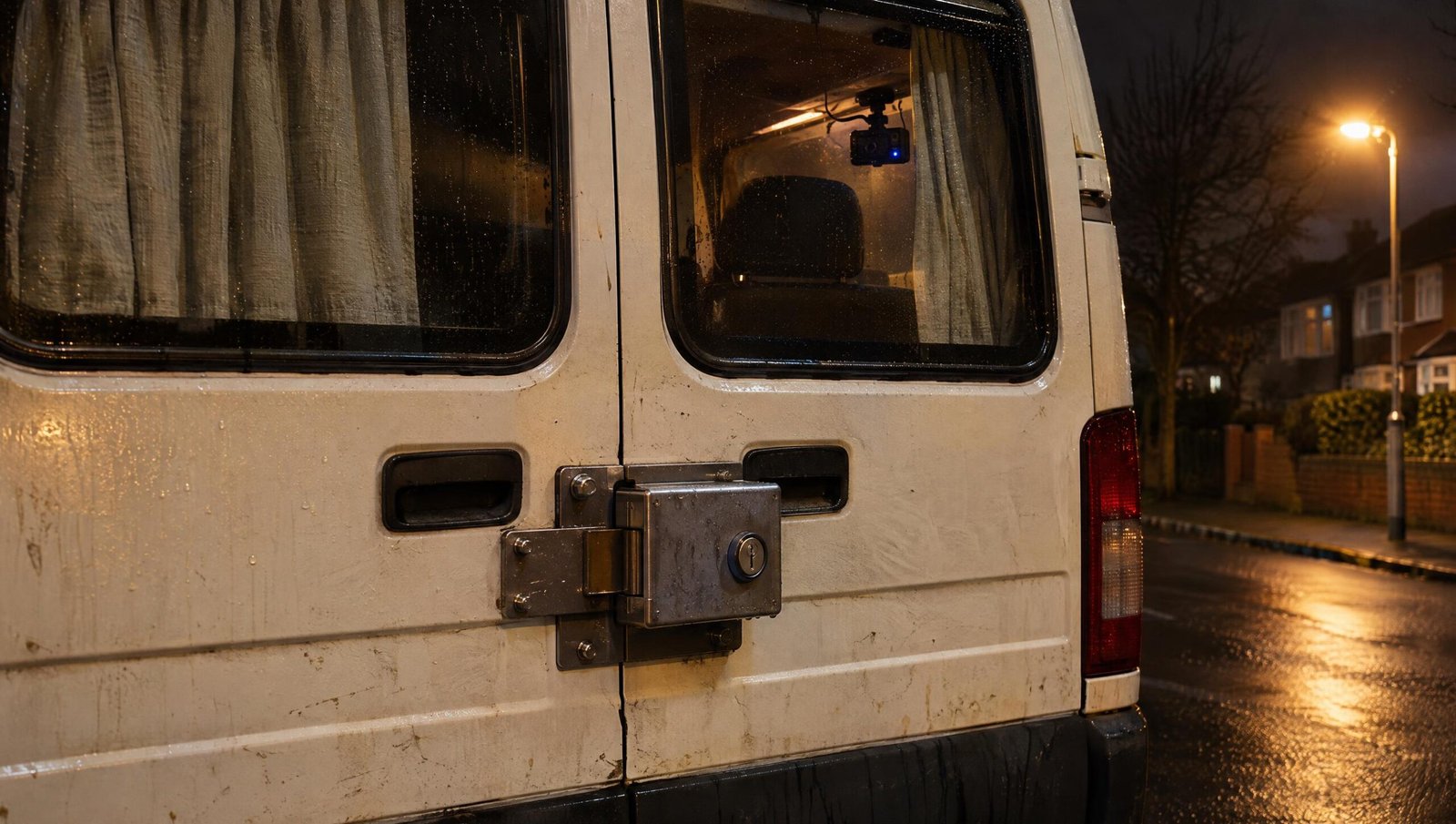
| External hasp or puck-style locks | Strong visual deterrent on rear and sliding doors | $80–$250 per door |
| Lock shields and anti-drill plates | Protect the handle and lock area | $50–$150 |
| Steering wheel lock | Visible deterrent against driving away | $40–$120 |
| OBD port lock or relocation | Blocks electronic key programming | $30–$150 |
| Catalytic converter shield | Slows converter theft | $150–$500 installed |
| Locking wheel nuts | Protect wheels and tires | $40–$100 |
| Bolted-down safe | Passports, laptops, cash | $60–$300 |
External locks make a van look more like a work truck. Some owners accept that as part of the deterrent. Others prefer hidden deadlocks that keep the exterior clean. Both approaches work.
Inside, a small safe bolted through the floor or a seat base gives documents and electronics a home. Remote workers carrying expensive kit should plan this early. Many mobile office vans include lockable storage for exactly that reason.
Ring Three: Alarms and Cameras
- Factory alarm. Check whether your van has one. Many cargo vans do not.
- Aftermarket alarm with door, motion and tilt sensors. About $200 to $600 installed.
- Cellular camera or dash cam with parking mode. About $100 to $400, plus data.
- Simple door sensors linked to your phone. Cheap and useful when you are nearby.
If you already carry internet for work, cameras become easier to run. Our Starlink for camper vans guide explains power draw and plans.
A plain alarm sticker and a blinking LED carry more weight than their price suggests.
Ring Four: Tracking and Recovery
| Tracker type | Upfront | Monthly | Notes |
|---|---|---|---|
| Bluetooth tag | $25–$35 | None | Relies on nearby phones. Good backup, weak in remote areas |
| Cellular GPS tracker, battery | $30–$100 | $5–$25 | Hide it anywhere. Recharge every few weeks |
| Hardwired GPS tracker | $50–$200 | $10–$25 | Always powered, movement alerts |
| Satellite tracker | $150–$400 | $15–$50 | Works without cell coverage |
Many owners use two: a hardwired unit and a hidden tag as a backup. Put them in different places.
Then do the paperwork. Photograph the van inside and out, record serial numbers for bikes and electronics, and store copies of the title and insurance in the cloud. The National Insurance Crime Bureau publishes current theft prevention advice and data.
Check your policy as well. Standard auto cover often excludes personal belongings and custom build components. Our camper van insurance guide explains agreed value and contents cover.
What Owners Who Have Been Hit Tell Us
A few lessons come up repeatedly when people share break-in stories.
It nearly always happened somewhere ordinary. A trailhead lot, a gym, a hotel car park. Remote dispersed sites are rarely the problem. Trailheads are a known hunting ground because thieves know you will be gone for hours.
The entry point was usually a cab window or a forced door lock, and it took under a minute.
What they wish they had done is rarely exotic. Hidden the bag. Taken the passports along. Written down the bike’s serial number. Bought the $40 tracker.
And nearly everyone says the mess and the lost time hurt more than the stolen items. A broken window in a small town on a Sunday can stall a trip for days.
Personal Safety While Sleeping
- Keep keys in the same reachable place every night
- Park so you can drive away forwards without maneuvering
- Keep a clear path from bed to driver’s seat
- Lock every door, including the rear, before bed
- If someone knocks late at night, talk through the closed door or simply start the engine and go
Solo travelers often choose vans with a pass-through cab for this reason. You can reach the driver’s seat without stepping outside.
Frequently Asked Questions
How do I make my camper van more secure?
Start with habits such as keeping valuables out of sight and parking under lights. Then add secondary door locks, a hidden GPS tracker and a visible deterrent such as a steering wheel lock.
Are camper vans easy to break into?
Stock vans are easier than most people expect, because factory locks favor convenience. Additional deadlocks and lock shields make a noticeable difference.
What is the best GPS tracker for a camper van?
A hardwired cellular tracker with movement alerts is the most reliable choice for most owners. A hidden Bluetooth tag makes a cheap backup, and satellite trackers suit remote travel.
Does insurance cover theft from a camper van?
Comprehensive cover usually protects the vehicle. Personal belongings and custom build parts often need specific RV or contents cover, so confirm the details with your insurer.
Is it safe to sleep in a camper van?
Yes, for the vast majority of nights. Choose locations carefully, lock all doors, keep keys within reach and leave if a place feels wrong.
Start With a Van That Is Built Right
Security is easier to design in than to add later. Browse camper vans for sale and ask sellers which locks, alarms and trackers are already fitted.