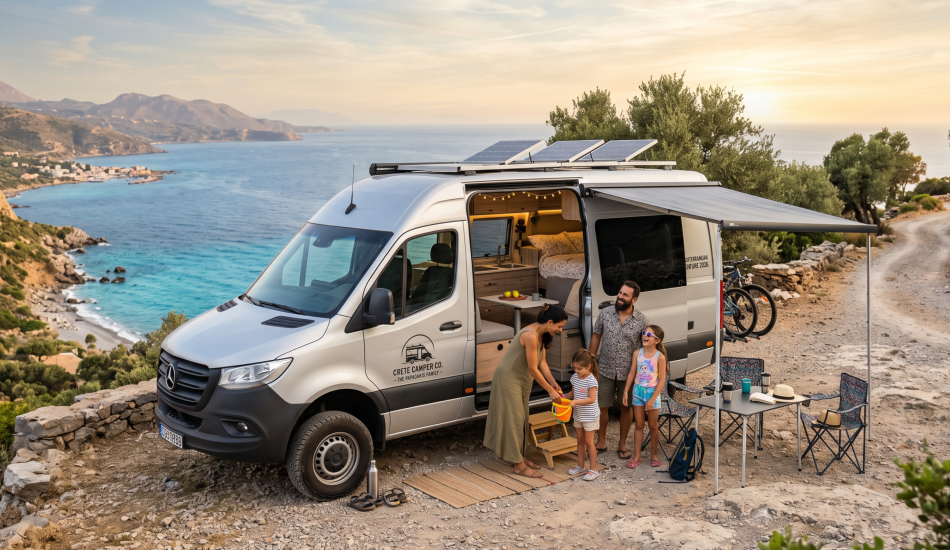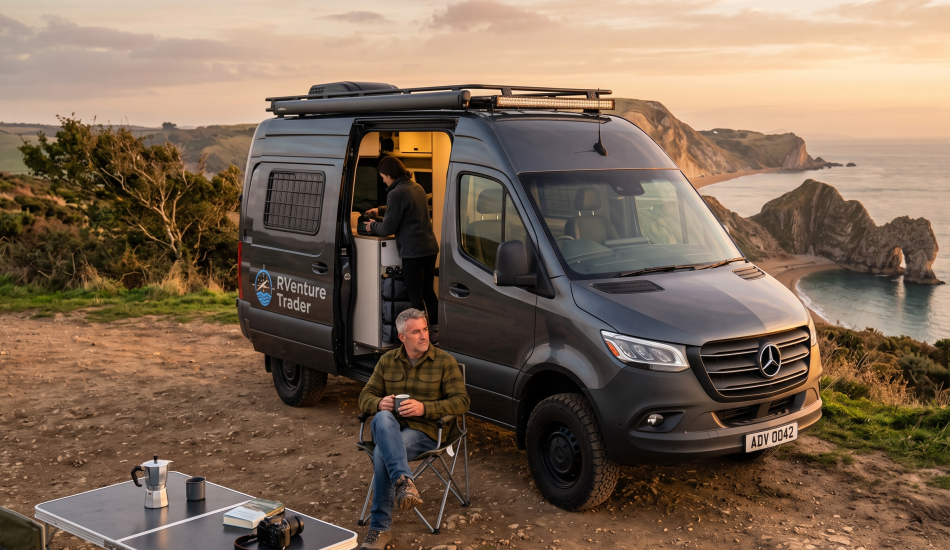

 souvik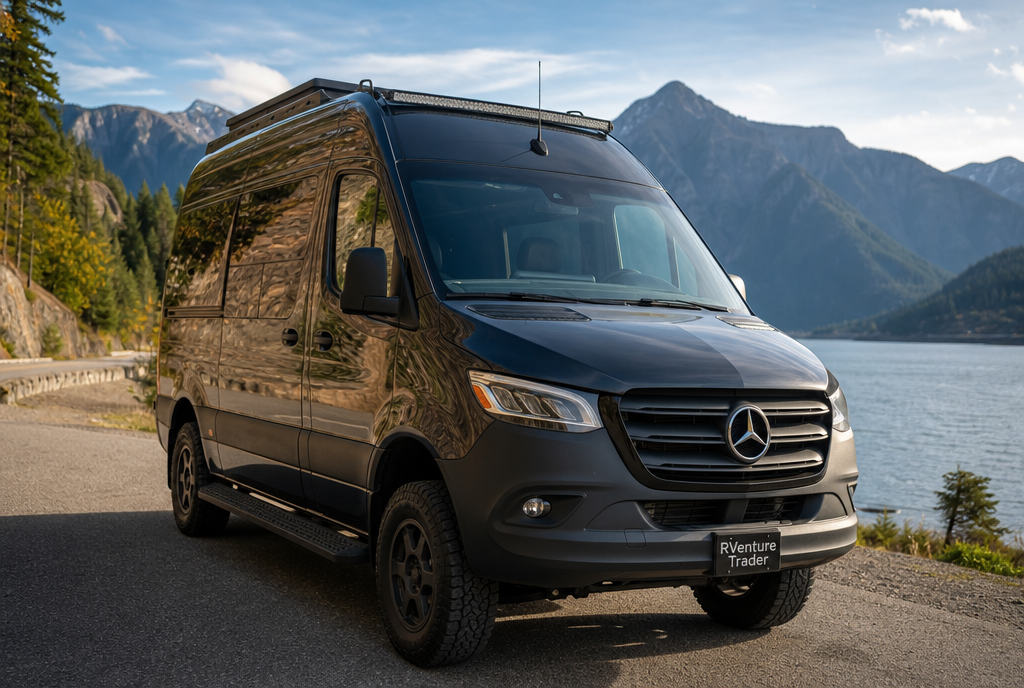
Camper Van Terminology Decoded: Class B, Conversion Van & What They Cost
Search for a camper van for sale and you will get results labelled Class B RV, conversion van, Class B+ , camper van, and “van conversion” — often for the exact same vehicle. The labels are not interchangeable, though. They describe different things: one is a legal RV classification, one is a lifestyle category, and one is an older aftermarket style of van that has almost nothing to do with camping.
Getting the vocabulary right is not pedantry. It changes what you can insure, how you title the vehicle, whether you can finance it with an RV loan, and roughly $40,000 of purchase price. Here is the plain-English breakdown.
Short answer: A Class B RV is a van-based motorhome certified as an RV by its manufacturer. A camper van is the everyday name for the same thing, plus DIY and custom builds that were never RV-certified. A conversion van is usually a 1990s–2000s passenger van customised for comfort — captain’s chairs, TV, raised roof — with no kitchen, no water system, and no RV title.
What is a Class B RV?
A Class B RV is a factory-built motorhome constructed on a full-size van chassis, sold complete and certified as a recreational vehicle. It keeps the van’s original body silhouette, which is what separates it from a Class C (van or truck cab with a wider box grafted on behind) and a Class A (bus-style chassis).
To be sold as a Class B, the build normally has to include a permanent sleeping area, a cooking facility, fresh and waste water tanks, and a 12V electrical system independent of the engine battery. Most add a wet bath. Manufacturers you’ll see repeatedly are Winnebago, Airstream, Thor, Coachmen, Pleasure-Way, Roadtrek and Storyteller Overland — nearly all of them building on a Mercedes-Benz Sprinter, Ford Transit or Ram ProMaster chassis.
Pricing is the part that surprises first-time buyers. New Class B RVs in 2026 range roughly $130,000 to $300,000, with best-value models clustering around $150,000 to $220,000 and coach-built luxury units climbing past $300,000. The average buyer spends approximately $140,000 to $180,000 on a new Class B camper van. If that number stops you, browse the Class B RV and camper van listings — used units two to four years old are where the real value sits, because these vans lose 20-30% of their value in the first year.
What is a camper van?
“Camper van” is the broader, informal umbrella. Every Class B RV is a camper van. Not every camper van is a Class B RV.
The difference is certification. A professionally converted Sprinter with a diesel heater, 400Ah of lithium, an induction cooktop and a shower is unquestionably a camper van — but if the converter isn’t an RVIA-registered manufacturer, the title may still read “cargo van” or “van, panel.” That single line on a title document affects three things:
- Financing. RV loans need the vehicle to be recognised as an RV. Otherwise you’re looking at an auto loan (shorter term) or an unsecured personal loan (higher rate).
- Insurance. A policy that only recognises chassis value leaves a six-figure buildout effectively uninsured after a loss — you have to specifically ask for agreed value on the conversion.
- Campground and ferry access. Rare, but some sites and crossings price or restrict by RV classification.
Camper vans also cover the sub-$100k end of the market entirely: pop-top VW-style rigs, mini-camper Transits, and DIY builds. If you’re weighing a build versus a finished van, our guide on what a camper van really costs in 2026 breaks the numbers apart line by line.
What is a conversion van?
This is the term most often misused. A conversion van is a full-size passenger van — think Chevy Express, GMC Savana, Ford E-Series, Dodge Ram Van — sent from the factory to a third-party “conversion” company that added comfort and styling: reclining captain’s chairs, a fold-down rear bench bed, carpeting, a raised fibreglass roof, running boards, a TV, and often a lot of chrome. They peaked in the 1990s.
What a conversion van almost never has: a galley, a fresh water tank, a grey tank, a propane system, a house battery bank, or an RV title. It is a comfortable vehicle you can sleep in, not a self-contained motorhome. People do buy them cheap ($4,000–$15,000) as a camping platform and add a bed and a cooler — a valid budget entry into van life, just don’t expect it to behave like a Class B.
Confusingly, “van conversion” (words reversed) means something different again: the modern process of converting a cargo van into a camper. A used work van bought as a conversion base is one of the cheapest routes into a capable camper.
Side-by-side comparison
| Class B RV | Camper Van (custom / DIY) | Conversion Van | |
|---|---|---|---|
| Typical price (2026) | $130k–$300k new; $65k–$140k used | $45k–$180k depending on build | $4k–$15k used |
| Base chassis | Sprinter, Transit, ProMaster | Any cargo van | Express, Savana, E-Series (older) |
| Kitchen & water tanks | Standard | Usually yes | No |
| Bathroom | Most models (wet bath) | Optional | No |
| Titled as an RV | Yes | Sometimes — check before buying | No |
| RV loan eligible | Yes | Only if RV-titled | No — auto loan |
| Insurance / year | $800–$1,500 recreational use | $500–$1,500; needs agreed value | Standard auto rates |
| Best for | Buyers who want warranty and zero build work | Buyers who want a specific layout for less | Weekend campers on a tight budget |
On the insurance side, a Class B campervan is the cheapest motorhome to insure, typically $800 to $1,500 per year for recreational use, and liability-only policies start around $125 per year, while full-time living pushes premiums to $1,500–$4,000+.
Which term should you search for?
Sellers use whichever label they think will sell. That means the same van appears under different names on different platforms, and searching only one term hides inventory from you. Practical approach:
- Search “Class B RV for sale” when you want a factory-built, RV-titled, warrantied unit and you’re financing with an RV loan.
- Search “camper van for sale” when you care about layout and features more than the badge — this is where custom Sprinter and Transit builds live.
- Search “conversion van” only if you’re specifically after a cheap 90s passenger van, or you’ll wade through irrelevant results.
- Search by chassis when you already know what you want: Sprinter camper vans for diesel range and AWD, Transit camper vans for gas simplicity and cheaper servicing.
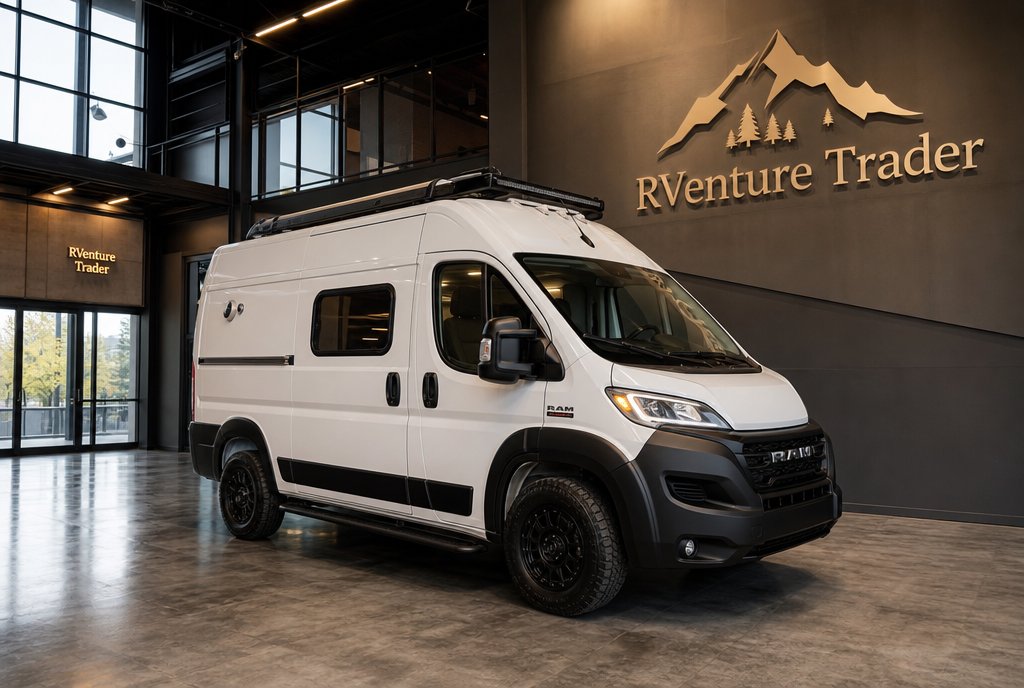
Where each type wins
Choose a Class B RV if…
You want to buy on Friday and camp on Saturday. Everything is engineered together, the systems are warrantied, dealers service them, and resale is predictable because buyers recognise the brands. The trade-off is price and the fact that you take the layout you’re given.
Choose a custom camper van if…
You have a non-negotiable requirement a factory floorplan won’t meet — a fixed bed at a specific height, a full interior shower, a desk for remote work, room for two dogs, or a pop-top for a fourth berth. You’ll usually get more usable van for your money, at the cost of a documentation trail you have to verify yourself.
Choose a conversion van if…
Your budget is under $15,000, you camp a handful of weekends a year, and you’re happy cooking outside. It’s the honest cheapest way to start.
Before you buy: three checks that matter more than the label
1. Read the title, not the ad. Ask the seller to photograph the title. “Motor home” or “RV” in the body-type field means RV financing and RV insurance are open to you. “Van” or “cargo” means they probably aren’t.
| Body type on the title | What it means for you |
|---|---|
| Motor home / MH / RV | RV loans and RV insurance both available; longest terms, lowest rates |
| Van / cargo van / panel van | Auto loan or personal loan only; insurance must be endorsed for the conversion |
| Passenger van / wagon | Standard auto financing and insurance; typical of conversion vans |
| Reconstructed / rebuilt | Many lenders and carriers decline outright — investigate the history hard |
2. Get the build documented. For any custom conversion, ask for the converter’s name, invoices, electrical diagram, and appliance model numbers. No paperwork means no agreed-value insurance and a harder resale.
3. Inspect the water system first. Water intrusion is the single most expensive fault in any camper. Our used camper van inspection checklist walks through the exact points to test, in order, before money changes hands.
Frequently asked questions
Is a Class B RV the same as a camper van?
In casual conversation, yes. Technically, a Class B RV is a certified, factory-built motorhome on a van chassis, while “camper van” also includes custom and DIY builds that were never RV-certified. Every Class B is a camper van; not every camper van is a Class B.
Can you live full-time in a Class B RV?
Yes, and thousands do. Expect insurance to cost 20–40% more than recreational use because the carrier treats the van as your primary residence, and budget for a gym membership or campground stops for showers if the van has only a wet bath.
Are conversion vans a good deal in 2026?
For pure weekend camping on a small budget, yes. As a full-time or long-trip vehicle, no — you’d be adding water, power, heat and cooking systems to a 20-to-30-year-old chassis, which usually costs more than buying a converted cargo van outright.
Why are Class B RVs more expensive than bigger Class C motorhomes?
Because engineering into a fixed van shell costs more per square foot than building a box on a chassis. The average new Class B in 2026 costs between $47 and $85 per square foot of living space, versus $12 to $25 for a Class C. You’re paying for compactness, drivability and the ability to park in a normal space.
Does a camper van need special insurance?
It needs a policy that covers the conversion, not just the van. Ask specifically for agreed value on the buildout — otherwise a total loss pays out the chassis value and leaves your interior uninsured.
Next steps
If you now know which category fits, narrow by size and use case: camper vans for two people if it’s just you and a partner, or family camper vans that sleep four if you’re travelling with kids. Both filters cut the shortlist down fast, and every listing on RVenture Trader shows the chassis, layout and sleeping capacity up front so you can compare like with like.