
 souvik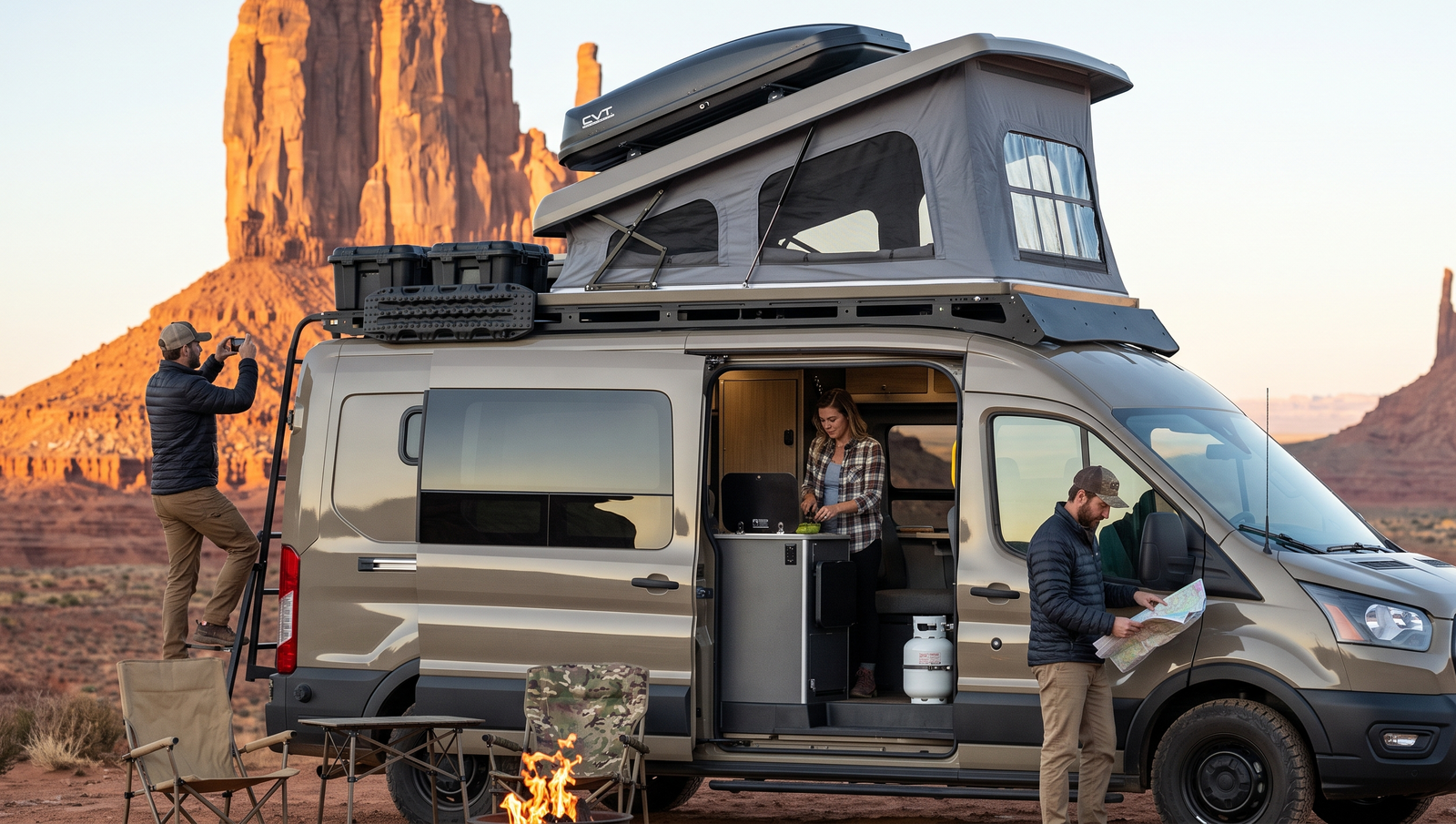
The Pop Top Camper Van Explained: Extra Beds Without the Extra Height
A pop top camper van adds an entire second bedroom — or full standing headroom — without adding a single inch of length or permanent height to your van. That’s why the pop top, an idea Volkswagen made famous on the classic Westfalia decades ago, is having a massive comeback on modern Sprinters, Transits, and ProMasters.
But pop tops aren’t free space: they cost $12,000–$20,000 installed, add weight and complexity, and aren’t ideal in every climate. This guide covers how they work, the honest pros and cons, cost tables, and a head-to-head against the high-roof alternative. If you already know you want one, the vans with pop tops collection shows every pop-top rig currently listed by verified dealers.
How a Pop Top Actually Works
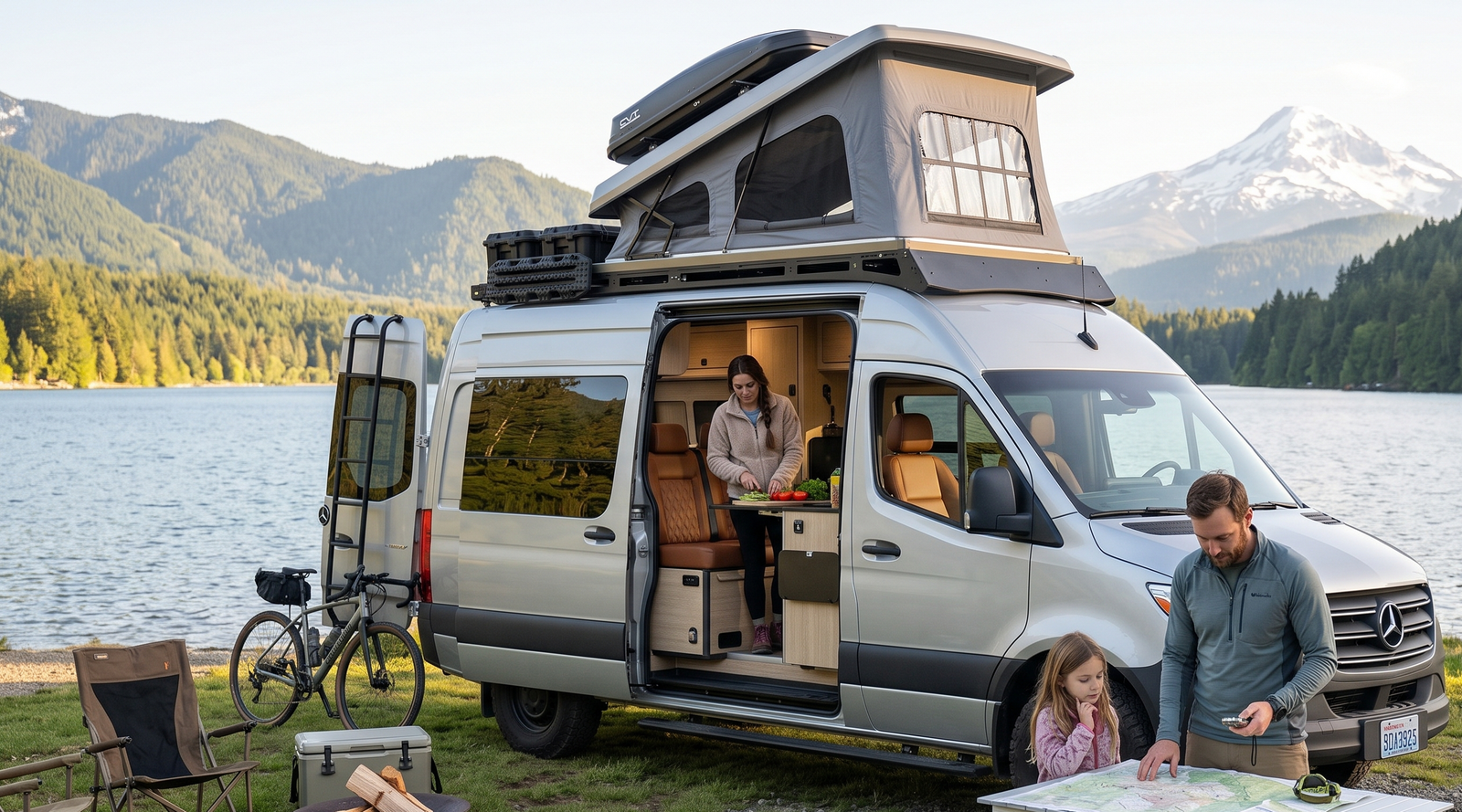
A section of the van’s roof is cut away and replaced with a hinged, insulated lid surrounded by canvas or hard-sided walls. Gas struts or electric actuators lift it in seconds. Inside, a fold-down bunk platform creates a genuine upstairs bed — and when closed, the van returns to standard height: garage-friendly, stealthy, and aerodynamic.
| Pop Top Type | What It Does | Typical Bunk Size | Best On |
|---|---|---|---|
| Full sleeping pop top | Adds an upstairs bedroom | 45–52″ wide × 75–80″ long | Standard-length high or low roof vans |
| Headroom pop top | Creates standing room in a low-roof van | No bunk (or occasional kid bunk) | Metris, low-roof Transit/Sprinter |
| Hard-sided pop top | Sleeping top with rigid insulated walls | Similar to full tops | Four-season and cold-climate rigs |
The Pros
1. Sleeps More Without a Bigger Van
This is the killer feature. A standard-length van that sleeps two becomes a four-sleeper. It’s the single most popular way to make a camper van for a family of 4 work without jumping to an extended wheelbase — kids sleep upstairs, parents keep the fixed bed below, and nobody rebuilds furniture at bedtime.
2. Keeps the Van Garageable and Stealthy
Closed, most pop-top vans stay under about 8’2″ — meaning home garages, parking structures, drive-thrus, and height-limited trailheads remain accessible. High-roof vans (9’5″–10′) permanently give all of that up. A low, plain-roofed van also draws far less attention when you need to overnight in a city — a real advantage our stealth camping guide covers in detail.
3. Sleeping Upstairs Is Genuinely Great
Cross-breeze through three mesh windows, treehouse views at eye level with the sunrise, and true separation between kids’ and parents’ zones. Many owners end up preferring the upstairs bed all summer.
4. Preserves Downstairs Living Space
The main floor stays a lounge/kitchen/office instead of being consumed by a second bed. Couples who work from the road sometimes buy a pop top purely to keep the downstairs functioning as a mobile office by day and move sleeping upstairs entirely.
5. Strong Resale
Pop-top vans consistently sell faster than equivalent fixed-roof rigs because they serve both the couples and family markets at once. Expect to recover a large share of the installation cost at resale.
The Cons
1. Cost
$12,000–$20,000 installed for quality units on a Sprinter/Transit/ProMaster (see cost table below). Real money — though much of it comes back at resale.
2. Cold and Loud in Bad Weather
Canvas walls are canvas walls. Below roughly 35°F you’ll want an insulated topper liner ($500–$1,200) and a diesel heater running; in serious wind, the upstairs gets noisy and flappy. Hard-sided pop tops solve most of this at higher cost and weight.
3. Weight and Complexity
A pop top adds 150–300 lbs up high, slightly affecting handling and payload, and it’s one more system — seals, struts, canvas, latches — to maintain. Installation quality matters enormously: a poorly sealed roof cut is the nightmare scenario, which is why professionally installed units from reputable builders command the premium they do. (Inspecting a used one? Our used camper van checklist covers exactly what to check on a pop top.)
4. Limits Rooftop Solar
The pop-top section occupies prime roof real estate. Most pop-top builds fit 200–400W of solar around the top, but heavy off-grid setups get constrained. If maximum solar and battery independence matter more than extra berths, compare against fixed-roof eco-friendly and off-grid builds that dedicate the whole roof to panels.
Pop Top vs. High Roof: The Head-to-Head
| Factor | Pop Top (closed ~8’2″) | High Roof (~9’5″–10′) |
|---|---|---|
| Extra sleeping berth | ✅ Yes — real upstairs bed | ❌ No (unless bunks built inside) |
| Standing room | Only when popped | Always |
| Home garage / parking structures | ✅ Fits most | ❌ Almost never |
| Stealth / low profile | ✅ Excellent | ❌ Obvious camper |
| Winter comfort | Weaker (canvas walls) | Stronger (insulated steel) |
| Wind noise while sleeping | Higher when popped | Low |
| Rooftop solar capacity | Limited (200–400W typical) | Full roof (400–800W) |
| Aerodynamics / MPG | Better | Slightly worse |
| Cost impact | +$12k–$20k added | Built into chassis price |
| Maintenance | Seals, struts, canvas | None extra |
Rule of thumb: families and stealth-focused travelers choose pop tops; full-time winter travelers and off-grid power maximalists choose high roofs. Plenty of couples split the difference with a high-roof van and no pop top — see what two-person layouts look like in our camper vans for couples guide, or browse short wheelbase vans where the pop top’s parking advantages stack with a nimbler footprint.
What Do Pop Top Camper Vans Cost in 2026?
Buying a van with a pop top
| Option | Price Range | Notes |
|---|---|---|
| Used compact pop tops (Metris, VW-style) | $60,000–$100,000 | Smallest footprint, easiest to daily-drive |
| Used pop-top Sprinter/Transit/ProMaster conversions | $65,000–$115,000 | Verify canvas, struts, and seal condition |
| New builds with factory-grade pop tops | $120,000–$180,000 | Warranty on both build and top |
| Premium 4×4 Sprinter pop-top builds | $160,000–$220,000+ | The do-everything family/adventure rig |
Adding a pop top to an existing van
| Cost Item | Typical Range |
|---|---|
| Quality pop top unit + professional installation | $12,000–$20,000 |
| Hard-sided upgrade | +$3,000–$6,000 |
| Insulated winter liner | $500–$1,200 |
| Upstairs mattress upgrade | $200–$600 |
For context on the full pricing landscape — chassis costs, systems, financing math — read How Much Does a Camper Van Cost in 2026?, and model a payment with our loan calculator. Pop-top additions can often be rolled into the purchase financing on a new build — details in the financing guide.
Who Should Buy a Pop Top? Quick Decision Guide
| You are… | Pop Top? |
|---|---|
| A family of 3–4 wanting a standard-length van | ✅ Strong yes — it’s the family formula |
| A couple who city-parks, garages the van, or stealth camps | ✅ Yes — height freedom is daily-life gold |
| A couple wanting max lounge space downstairs | ✅ Worth considering |
| A full-time winter traveler | ⚠️ Only hard-sided, with liner + heater |
| An off-grid maximalist needing 600W+ solar | ❌ High roof serves you better |
| A buyer at the absolute bottom of the budget | ❌ Skip it — put the $15k into systems |
Frequently Asked Questions
Is a pop top camper van worth it?
If you need to sleep 3–4 people in a standard-length van, or you need garage-height parking, yes — no other feature adds a bedroom without adding length, and you recover much of the cost at resale. If you’re a couple traveling in cold climates, a high-roof van is usually the better buy.
How much does a pop top roof cost?
Quality pop tops cost $12,000–$20,000 installed on a Sprinter, Transit, or ProMaster in 2026. Hard-sided versions and winter liners add to that.
Can you sleep in a pop top in winter?
Yes, with an insulated topper liner and a diesel heater running. Canvas-walled tops are comfortable down to roughly freezing; hard-sided pop tops and four-season liners extend that range considerably.
How much weight can a pop top bed hold?
Quality units are rated for 400–600 lbs — two adults. Always verify the specific manufacturer’s rating in the listing before buying.
Do pop tops leak?
Professionally installed units from established manufacturers rarely do. The risk lives in amateur installs — one more reason to buy from verified dealers who document and stand behind the installation.
See them for yourself: browse every pop top camper van for sale on RVenture Trader — full specs, transparent pricing, direct dealer contact.