
 souvik
AWD Van Guide 2026: Best AWD Van Options, AWD Sprinter Van vs Ford Transit Van AWD
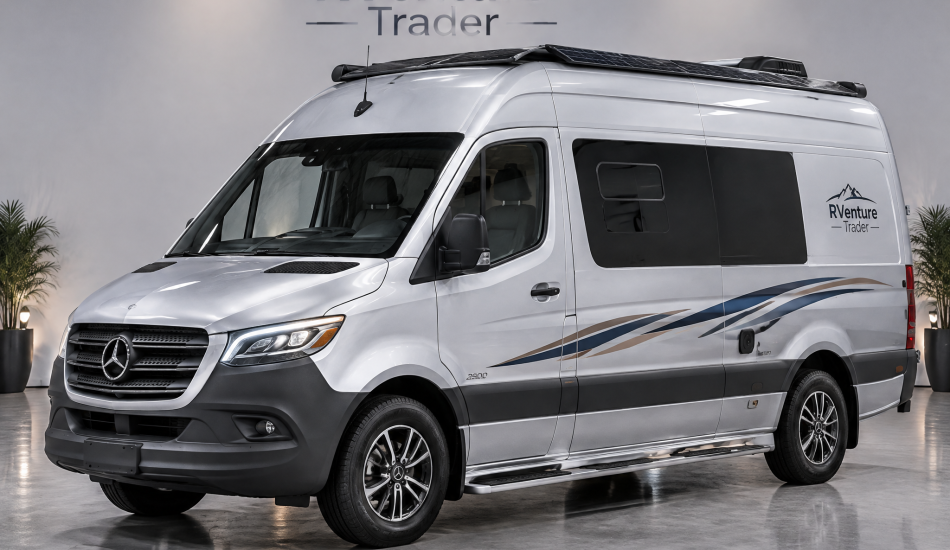
All-wheel drive changed the van market. A decade ago, getting a full-size van to a snowy trailhead meant an expensive aftermarket 4×4 conversion with questionable resale. Today you can order an awd van straight from the factory, with a warranty.
But AWD costs real money, both upfront and every mile afterwards, and plenty of buyers pay for capability they use twice a year. This guide compares the mainstream options honestly, explains what AWD actually does and does not do, and gives you a straightforward way to decide whether it belongs in your budget.
Short answer: The two mainstream AWD vans in the US are the Mercedes AWD Sprinter van and the Ford Transit van AWD. AWD adds roughly $4,000–$10,000 to the purchase price and costs 1–2 MPG, and it improves traction on snow, gravel and wet grass — but it is not a substitute for real off-road 4×4 with low range.
AWD vs 4×4: the distinction that matters
- AWD sends power to all four wheels automatically, with no driver input and no low-range gearing. Excellent for snow, wet roads, gravel, sand and campsite grass.
- 4×4 adds selectable low range and usually more ground clearance and stronger axles. Necessary for steep, rocky, technical terrain where you need torque multiplication rather than just traction.
- The honest truth: for 90% of van travel, AWD plus good all-terrain tyres handles everything a 4×4 would, and drives better the rest of the time.
What tyres do that AWD cannot
This is the most underrated point in the whole discussion. AWD helps you accelerate. It does not help you stop or steer. A rear-wheel-drive van on quality all-terrain or winter tyres often outperforms an AWD van on worn highway tyres in exactly the conditions people buy AWD for. If your budget is tight, tyres are the first upgrade and AWD is the second.
Best AWD van options compared
| AWD Sprinter | Ford Transit AWD | Ram ProMaster | |
|---|---|---|---|
| Drivetrain | AWD / 4×4 available | AWD | FWD only |
| Fuel | Diesel or gas | Gas (V6 / EcoBoost) | Gas |
| Interior height | Tallest | Tall | Tall, widest floor |
| Service cost | Highest | Lowest | Low |
| AWD premium | ~$6,000–$10,000 | ~$4,000–$6,000 | N/A |
| Range per tank | 400–500 mi diesel | 300–400 mi | 300–380 mi |
| Best for | Long-range off-grid travel | Value and easy service | Budget paved-road builds |
The short version: the best awd van for most buyers is a Transit AWD if budget and service access matter, and an AWD Sprinter if range, height and resale matter more. Check current builds in Sprinter camper vans for sale and Transit camper vans for sale.
AWD Sprinter van in detail
- Available on 144″ and 170″ wheelbases, high roof, 2500 and 3500 series
- Diesel variants typically return 13–18 MPG with AWD
- Higher ride height than 2WD, which also improves the departure angle on steep campsite entries
- Mercedes also offers a more serious 4×4 configuration in some markets and model years, with low range
- Almost every premium off-grid camper build in the US starts on this platform
- The trade-off: highest service costs of any van here, and a diesel emissions system that needs regular highway miles
Official configurations are published at Mercedes-Benz Vans USA. Browse listings under Mercedes-Benz vans, or read the full Sprinter camper van guide.
Ford Transit van AWD in detail
- AWD offered across cargo, crew and passenger configurations
- Gas only — no diesel, which means shorter range but no DPF or DEF maintenance to worry about
- The EcoBoost engine is notably strong at altitude, where naturally aspirated engines lose power
- Service at any Ford dealer nationwide, typically at roughly half the labour rate of a Mercedes commercial centre
- Usually $20,000–$40,000 cheaper than an equivalent Sprinter build once converted
- The trade-off: lower resale than a Sprinter, and shorter range between fuel stops
Specifications are on Ford’s Transit page, and you can compare MPG figures year by year at fueleconomy.gov. See all Ford van listings.
AWD cargo van: when businesses need it
An awd cargo van is not just a van-life thing. It earns its cost in specific commercial cases where a day off the road costs more than the option ever did:
- Delivery routes in snow-belt states — reliability of service through winter is the entire argument.
- Construction and utility access to unpaved and unfinished sites, where a stuck van means a lost day for a whole crew.
- Mobile service businesses in mountain regions — plumbers, electricians and equipment technicians who cannot choose their weather.
- Rental and tour fleets that need year-round availability and market it as a selling point.
- Film and survey work where the vehicle has to reach the location regardless of surface.
Browse commercial-spec options in work vans for sale or across all van body types. If you are buying to convert later, our cargo van buying guide covers mileage thresholds and inspection points.
What AWD actually costs you
| Cost area | Impact |
|---|---|
| Purchase (base van) | +$4,000–$10,000 |
| Purchase (finished camper) | +$10,000–$20,000 |
| Fuel | −1 to −2 MPG (~$300–$600/yr at 12,000 mi) |
| Tyres | All-terrains cost more and wear faster |
| Servicing | Extra differential and transfer-case fluid changes |
| Resale | +5–10% value, sells faster |
That last row matters. AWD is one of the few expensive options that recovers a meaningful share of its cost at resale, because the pool of buyers looking specifically for AWD is large and the supply is limited.
A simple way to decide
Ask one question: how many nights a year will you camp somewhere a 2WD van with all-terrain tyres and traction control could not reach?
- Under 5 nights — skip AWD. Spend the money on battery capacity, insulation or a better heater, all of which you will use every single trip.
- 5–20 nights — borderline. Good tyres plus recovery boards cover most of it for under $2,000.
- Over 20 nights, or you live where it snows — buy AWD. It changes where and when you can travel, and it holds its value.
Things AWD will not fix
- Ground clearance. A van with AWD and a low belly still high-centres on a rutted road.
- Weight. A fully loaded camper van is heavy, and momentum works against you in sand and mud regardless of drivetrain.
- Braking on ice. All four wheels driving does nothing for stopping distance.
- Bad tyres. Worn highway tyres undo the entire benefit.
- Getting unstuck alone. Traction boards, a shovel and a tow strap remain essential kit whichever drivetrain you have.
Frequently asked questions
What is the best AWD van?
For most buyers, the Ford Transit AWD offers the best balance of capability, price and nationwide service. The AWD Sprinter is better if you need maximum interior height, diesel range or the strongest resale value, and it is the platform most premium camper builds use.
Is an AWD Sprinter van worth the extra cost?
Worth it if you travel in snow states, camp on forest roads or want the higher ground clearance. If you stay on pavement and at developed campgrounds, a 2WD van on good all-terrain tyres handles nearly the same conditions for thousands less.
Does the Ford Transit come in AWD?
Yes. Ford offers AWD across Transit cargo, crew and passenger configurations, gas only. It typically adds $4,000–$6,000 to the price and costs 1–2 MPG compared with the rear-wheel-drive version.
Is AWD the same as 4×4 on a van?
No. AWD distributes power automatically with no low-range gearing. A 4×4 adds selectable low range and usually more clearance for technical terrain. AWD covers snow, gravel and wet grass; 4×4 covers rock crawling and steep loose climbs.
Does AWD hurt fuel economy on a van?
Yes, typically by 1–2 MPG from added weight and drivetrain loss. Over 12,000 miles a year that is roughly $300–$600 in extra fuel.
Can you get an AWD cargo van used?
Yes, though supply is tighter than 2WD and prices run a few thousand higher. AWD Transits from 2020 onward and AWD Sprinters from 2019 onward appear regularly in the used market.
Do AWD vans hold their value better?
Yes, typically 5–10% more at five years, and they sell faster because demand consistently outstrips supply. It is one of the few options that partially pays for itself.
Is AWD or snow tyres better for winter van travel?
Snow tyres make the bigger difference to safety, because they improve braking and cornering as well as acceleration. AWD improves only acceleration. The best combination is obviously both, but if you must choose one, choose the tyres.