By the RVenture Trader Team
What RV Insurance Really Costs — and Where Buyers Get It Wrong
How much is RV insurance in 2026?
RV insurance costs $500 to $3,500 per year in 2026, depending on class, value and how you use the rig. Class B camper vans are the cheapest motorhomes to insure at roughly $600–$2,000 a year. Travel trailers run $300–$800. Class A coaches range from $1,200 to $4,500. Full-time living adds 20–100% on top.
The Short Version
- Average cost: about $1,500/year nationally. Class B camper van insurance is the cheapest motorhome class at $600–$2,000.
- Auto insurance is not enough. It covers the chassis, not the conversion, the contents, or anything that happens while you’re parked and living in it.
- Agreed value beats actual cash value on any converted van. It costs 10–20% more and can be worth tens of thousands after a total loss.
- Good Sam and Roamly are agencies, not carriers. They shop multiple insurers for you — convenience and access, not an automatic discount.
- Not every carrier writes DIY builds. Progressive, for one, insures professionally converted vans but declines self-converted ones.
- Full-timers need a full-timer policy. Claiming recreational use while living in the rig is the fastest route to a denied claim.
- Get three RV insurance quotes minimum — one specialist agency, two direct carriers, all on identical coverage limits.
- Biggest red flag: a suspiciously cheap quote almost always means the conversion value isn’t on the policy.
What actually decides where you land inside those ranges — and what most first-time buyers get wrong — is the coverage structure, not the carrier. Insuring a $140,000 professionally converted Sprinter on a standard auto policy at actual cash value is the single most expensive mistake in this category, and it’s also the most common.
If you’re still shopping, our
camper van financing guide covers the loan side of the same purchase — lenders almost always require proof of insurance before releasing funds — and our
camper van cost breakdown puts the premium in context against the rest of the ownership budget.
What Is RV Insurance — and Why Auto Insurance Isn’t Enough
RV insurance is a specialised policy that covers both the vehicle
and the living space inside it. A standard auto policy covers the chassis, engine and liability while driving. It does not cover the conversion, the appliances, your belongings, or anything that happens while the vehicle is parked and being lived in.
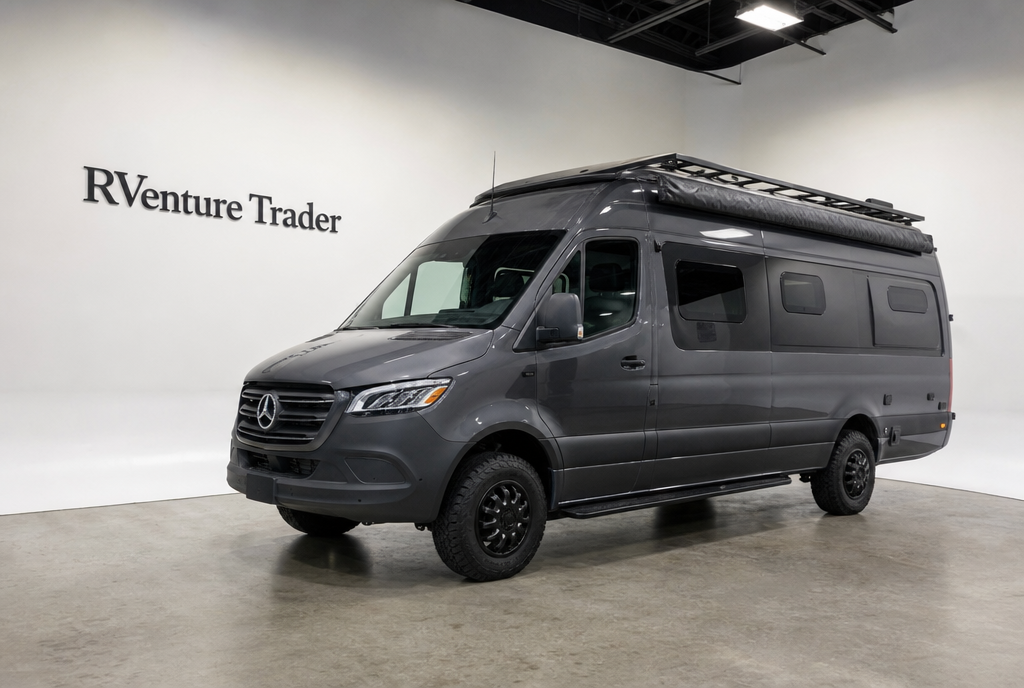
That gap is enormous on a modern camper van. A bare cargo van is a commodity: a 2026 Sprinter 2500 in its cheapest configuration
starts near $50,830 including destination, and you can price any spec on the
Mercedes-Benz Vans configurator. The same van professionally converted with a lithium electrical system, cabinetry, a bathroom and a diesel heater can be worth $140,000.
A standard auto policy insures the first number.
What RV Insurance Covers That Auto Insurance Doesn’t
| Coverage |
What It Protects |
Why It Matters |
| Conversion / customisation |
Cabinetry, solar, appliances, upfitting |
Often the majority of the vehicle’s value |
| Personal effects |
Clothing, gear, electronics, tools inside |
Auto policies exclude contents entirely |
| Vacation liability |
Injury claims while parked and camping |
Your auto liability stops when the engine does |
| Emergency expense |
Lodging and transport if the RV is disabled |
Your rig is also your accommodation |
| Full-timer liability |
Homeowner-style liability when the RV is home |
You have no homeowner’s policy to fall back on |
| Roadside assistance (RV-rated) |
Towing for a 9,000 lb vehicle |
Standard auto roadside won’t tow an RV |
Is RV Insurance Required by Law?
- Motorised RVs (Class A, B, C): liability insurance is legally required in every US state, exactly like a car. Forty-nine states and DC mandate liability coverage outright; New Hampshire instead requires proof of financial responsibility.
- Towable RVs (travel trailers, fifth wheels): generally no separate liability required — the tow vehicle’s policy extends to them. You still need comprehensive and collision to protect the trailer itself.
- Financed rigs: your lender will require full coverage regardless of state law.
RV Insurance Cost by Type in 2026
Rates below reflect published 2026 ranges from major RV carriers including Progressive, Foremost and National General, for recreational use, a clean driving record and standard $500–$1,000 deductibles.
| RV Type |
Annual Premium |
Monthly Equivalent |
| Pop-up camper |
$200–$500 |
$17–$42 |
| Travel trailer |
$300–$800 |
$25–$67 |
| Fifth wheel |
$500–$1,200 |
$42–$100 |
| Class B camper van |
$600–$2,000 |
$50–$167 |
| Class C motorhome |
$1,000–$2,500 |
$83–$208 |
| Class A (gas) |
$1,000–$1,500 |
$83–$125 |
| Class A (diesel pusher) |
$3,000–$4,500 |
$250–$375 |
For reference, Progressive’s published national averages put travel trailer coverage around $594 a year and motorhome coverage around $1,052. The national average across all RV types sits near $1,500 annually. If you’re pricing a rig and a policy at the same time, the
payment calculator lets you model the loan and the premium as one monthly number.
The 9 Factors That Move Your RV Insurance Rate Most
- RV class and value — the biggest single input. Underwriters price off replacement cost first.
- Recreational vs full-time use — full-timers pay 20–100% more.
- State — Texas typically runs 10–25% above Pennsylvania on an identical Class C, driven by hail exposure and higher uninsured-motorist rates.
- Annual mileage — under 5,000 miles a year qualifies for the lowest tier.
- Driving record — at-fault accidents hit motorhome rates harder than car rates.
- Storage location — a locked, covered facility beats street parking by a meaningful margin.
- Agreed value vs actual cash value — where most money is won or lost.
- Deductible — moving $500 → $1,000 typically cuts 10–15%.
- Conversion documentation — professionally built, documented rigs are far easier to insure at full value.
Camper Van Insurance: The Two Cases That Break the Rules
Class B camper vans are the cheapest motorhome class to insure — smaller, easier to drive, and lower total-loss value than a 35-foot Class A. But two quirks make
camper van insurance genuinely different from insuring any other RV.
Quirk 1 — The Conversion Is Worth More Than the Van
A professionally upfitted Sprinter, Transit or ProMaster can be worth two to three times the base cargo van. Carriers will happily write a policy against the
chassis value if you let them.
What to do: insure the full converted value on an
agreed value basis and provide the build invoice. If the builder issued a documented spec sheet — electrical system, appliances, materials — submit it with the application. Rigs sold through verified sellers on
RVenture Trader generally come with this paperwork, which materially simplifies underwriting. The same is true across the
Class B RV listings and
luxury camper vans, where documentation is exactly what separates a smooth underwriting process from a fight.
Quirk 2 — DIY Conversions Are Harder to Insure
A self-converted van sits in an awkward middle ground. It’s no longer a cargo van, but many carriers won’t classify it as a motorhome either. Some won’t write it at all — Progressive, for example, covers professionally converted camper vans but declines DIY builds. To get one insured at real value, most carriers want:
- RV title reclassification through your state DMV (requirements vary widely by state)
- Evidence of permanently installed systems — fixed bed, cooking facility, water system, 120V electrical and heating
- Photo documentation of the finished build, inside and out
- Receipts for major components: battery bank, solar, appliances, insulation
Specialist agencies place DIY conversions far more readily than large national auto insurers —
Roamly, for instance, places policies through Spinnaker, Progressive, Liberty Mutual, Foremost and National General depending on the rig and the state. If two carriers decline you, that’s a signal to work with an RV specialist rather than keep applying direct. Our
RV solar panels and electrical system guide covers the documentation worth keeping from a build, and the
used work vans most DIY builds start from.
Class B Camper Van Insurance Reference
| Van Type |
Typical Annual Premium |
| Basic Ford Transit conversion |
$500–$800 |
| Mid-range professional build |
$900–$1,400 |
| Luxury Sprinter with premium upfit |
$1,200–$2,000+ |
| Full-time occupancy (any of the above) |
Add 20–100% |
RV Insurance Coverage Types Explained
| Coverage |
What It Does |
Verdict |
| Bodily injury & property damage liability |
Injury or damage you cause to others |
Required. Don’t carry state minimums on a 9,000 lb vehicle |
| Collision |
Damage to your RV from a crash, regardless of fault |
Required by lenders; essential if financed |
| Comprehensive |
Theft, fire, hail, falling trees, vandalism, animal strikes |
Essential. Hail alone justifies it in most of the country |
| Uninsured / underinsured motorist |
Covers you when the at-fault driver isn’t insured |
Strongly recommended — see the numbers below |
| Personal effects |
Your belongings inside the RV |
Full-timers carry $5,000–$25,000 |
| Vacation liability |
Injury claims while parked and in use |
Cheap, and covers a real uncovered gap |
| Full-timer liability |
Homeowner-equivalent liability |
Mandatory if you live in it |
| Emergency expense / trip interruption |
Lodging, meals, transport when disabled away from home |
High value per dollar |
| Roadside assistance (RV-rated) |
Towing and service for a heavy vehicle |
Verify weight and length limits first |
| Total loss replacement |
Replaces a newer RV with a new comparable unit |
Worth it in the first 3–5 years |
Why uninsured motorist coverage isn’t optional. Roughly one in seven US drivers carries no liability insurance at all, and Insurance Research Council data puts the combined uninsured-plus-underinsured figure at one in three drivers — up ten percentage points since 2017. On a six-figure rig, the driver who hits you is the risk you can’t control.
Agreed Value vs Actual Cash Value — the Decision That Costs the Most
|
Agreed Value |
Actual Cash Value (ACV) |
| How it pays |
A figure set in writing at policy issue, no depreciation |
Depreciated market value at time of loss |
| Premium impact |
10–20% more |
Cheaper upfront |
| Who decides the payout |
You and the insurer, in advance |
An adjuster, after the loss |
| Best for |
Converted vans, rigs under 5 years old, custom builds |
Older, lower-value trailers |
On a $140,000 converted Sprinter that’s three years old, an ACV settlement after a total loss could come in tens of thousands below what you paid — based on what an adjuster believes a used van is worth, not what your build cost.
Full-Time RV Insurance vs Recreational
If the RV is your primary residence you need a
full-timer policy. Telling a carrier you’re a recreational user when you actually live in the rig is misrepresentation — and it typically results in a denied claim at the worst possible moment.
|
Recreational Policy |
Full-Timer Policy |
| Who it’s for |
Weekend and seasonal users |
Living in the RV 150+ days/year |
| Cost impact |
Baseline |
20–100% higher |
| Liability while parked |
Vacation liability, limited |
Full homeowner-equivalent liability |
| Personal effects limits |
Lower |
Substantially higher |
| Loss of use |
Limited |
Covers alternative housing |
| Medical payments to others |
Basic |
Expanded |
Most carriers define “full-time” as roughly 150+ days of occupancy per year, though the threshold varies. On the road more than five months a year? Ask the carrier directly rather than assuming. If you’re working from the rig as well as living in it, our
mobile office van conversion guide and the
mobile office van listings cover the equipment that pushes personal effects limits up fast.
Best RV Insurance Companies in 2026
There’s no single best RV insurance provider — the right answer depends on your class, your state, whether you’re a full-timer, and whether your rig is a factory Class B or a self-conversion. The first thing to sort out is which of these names actually issues a policy and which ones just sell you one.
| Carrier / Agency |
Type |
Strongest For |
Notable |
| Progressive |
Direct carrier |
Broad availability, competitive base rates, bundling |
Widest RV appetite among national carriers — but declines DIY conversions |
| Good Sam |
Agency |
Full-timers, comparison shopping, club perks |
Not an insurer itself — see below |
| National General |
Direct carrier |
Full-timer policies, higher-value coaches |
Long-standing RV specialist; also underwrites for agencies |
| Foremost (Farmers) |
Direct carrier |
Older RVs, DIY conversions, unusual rigs |
Broader appetite for non-standard vehicles |
| Roamly |
Agency (licensed general agent) |
Van conversions, rigs that get rented out |
Built around van life; policies underwritten by Spinnaker, Progressive, Liberty Mutual, Foremost and others |
| Safeco / Geico / State Farm |
Direct carriers |
Bundling with existing auto and home |
RV-specific peril depth varies by state |
What Is Good Sam RV Insurance, Exactly?
This confuses a lot of buyers, so it’s worth being precise:
Good Sam RV insurance is an insurance agency, not an insurance company. Good Sam does not underwrite policies. It shops your profile across a panel of carriers — including Progressive, Allstate, Liberty Mutual, National General and Foremost — and places you with one of them.
- You get multi-carrier comparison through one application, which saves real time.
- The policy is issued and serviced by the underlying carrier, not by Good Sam.
- Good Sam membership perks (campground discounts, roadside assistance, fuel savings) are a separate product from the insurance itself.
- Pricing isn’t automatically better than going direct — the value is convenience and access to RV-specialist carriers, not a guaranteed discount.
The practical approach: get one quote through an RV-specialist agency, and one or two direct quotes from carriers like Progressive or Foremost. Compare the
coverage structure, not just the premium. And check the carrier’s complaint record with your own state’s department of insurance before you sign — every state publishes one.
How to Compare Carriers Properly
- Agreed value or ACV? A cheaper ACV quote is not a cheaper policy.
- What conversion value is on the declarations page? Chassis only, or full build?
- Personal effects limit — $1,000 or $15,000?
- Full-timer liability included? Non-negotiable if you live in it.
- Roadside towing weight and length limits — many plans cap below RV weights.
- Who actually underwrites it? Ask the agency to name the carrier before you compare anything else.
How to Get an Accurate RV Insurance Quote
Most inaccurate quotes come from incomplete applications, not from carriers being sneaky. Have these ready before you start.
What to Gather First
- VIN and vehicle year, make, model, length — run it through the free NHTSA VIN decoder first so your application matches what the manufacturer reported
- Purchase price and dated bill of sale
- Builder’s invoice or spec sheet for any conversion work
- Photos — exterior all four sides, interior, electrical bay, appliances
- Estimated annual mileage
- Storage address and type (garage, covered lot, street)
- Driving records for every household member who will drive it
- Honest occupancy estimate — days per year you’ll live in it
- Lienholder details, if financed
The Five-Step RV Insurance Quote Process
- 1. Decide agreed value vs ACV before you call. It shapes every quote and makes them comparable.
- 2. Get three quotes minimum — one specialist agency, two direct carriers.
- 3. Request identical coverage limits from each so you’re comparing the same product.
- 4. Ask specifically about conversion coverage and confirm the dollar figure appears on the declarations page.
- 5. Ask what discounts you qualify for before accepting — most are not applied automatically.
Warning: an unusually low RV insurance quote almost always means the conversion value isn’t on the policy. Ask the agent to read back the insured value. If it matches the base cargo van price rather than what you paid, the quote isn’t real.
Buying Used? Check the Title Before You Apply
A branded title changes what a carrier will write, and sometimes whether they’ll write it at all. Before you request a quote on a used rig, run the VIN through the free lookups your state DMV points to —
NICB VINCheck, NMVTIS and the federal recall database. Flood damage is the one to watch: state insurance regulators warn that
water-damaged RVs and campers surface on the resale market in all 50 states, often carrying paperwork from somewhere the flood never reached. Our
used camper van inspection checklist covers what to test in person once the paperwork clears.
11 Ways to Lower Your RV Insurance Premium
- Raise the deductible from $500 to $1,000 — typically 10–15% off
- Bundle with auto and home — often the single largest discount available
- Store it covered or secured and tell the carrier
- Take an RV safety course — many carriers discount certified completion
- Ask about a seasonal / layup policy — liability-only during winter storage
- Report low annual mileage accurately — under 5,000 miles is a real rate tier
- Join an RV club (Good Sam, FMCA, Escapees) — several carriers recognise memberships
- Pay annually rather than monthly — avoids installment fees
- Install anti-theft and GPS tracking
- Keep the claim history clean — one at-fault claim outweighs every discount above
- Re-shop at every renewal — carrier appetite for RVs shifts year to year
Common RV Insurance Mistakes
- Insuring only the chassis. The most expensive error in the category. Confirm the conversion value is written on the policy.
- Choosing ACV on a new, high-value build. You’ll discover the gap only after a total loss.
- Claiming recreational use while living full-time. The fastest route to a denied claim.
- Assuming your auto policy covers trailer contents. It doesn’t. It never has.
- Carrying state-minimum liability on a 9,000 lb vehicle. A motorhome at highway speed does far more damage than a sedan.
- Skipping uninsured motorist coverage. One in three drivers is uninsured or underinsured — that’s the risk you don’t control.
- Not updating after upgrades. A $6,000 lithium-and-solar system changes the insured value — tell the carrier.
- Letting the policy auto-renew for five straight years. Rates drift. Shop every renewal.
Frequently Asked Questions About RV Insurance
How much is RV insurance per year?
RV insurance costs $500 to $3,500 per year in 2026 for most owners. Travel trailers average $300–$800, Class B camper vans $600–$2,000, Class C motorhomes $1,000–$2,500, and Class A coaches $1,200–$4,500. The national average across all types is roughly $1,500 annually.
Is RV insurance required by law?
Liability insurance is legally required for all motorised RVs in every US state. Towable RVs like travel trailers generally don’t require separate liability because the tow vehicle’s policy extends to them, but lenders require full coverage on any financed RV.
How much does camper van insurance cost?
Class B camper van insurance typically runs $600 to $2,000 per year for recreational use. A basic Ford Transit conversion may cost $500–$800, while a luxury Sprinter with a premium professional upfit can reach $1,200–$2,000 or more. Full-time living adds 20–100%.
What is Good Sam RV insurance?
Good Sam is an insurance agency, not an insurance carrier. It shops your profile across a panel of RV-specialist carriers including Progressive, Allstate, Liberty Mutual, National General and Foremost, and places the policy with one of them. Good Sam’s value is multi-carrier comparison and club benefits, not an automatic discount.
Who has the best RV insurance?
There’s no universal best. Progressive offers the widest availability and strong online quoting, National General is strong on full-timer policies, Foremost handles older and non-standard rigs, and Roamly specialises in van conversions and rentals. Compare at least three quotes on identical coverage limits.
Do I need full-time RV insurance?
Yes, if the RV is your primary residence or you occupy it more than roughly 150 days a year. Full-timer policies add homeowner-style liability, higher personal effects limits, and loss-of-use coverage that recreational policies don’t include.
Can I insure a DIY van conversion?
Yes, but it’s harder, and not every carrier will write one — Progressive covers professionally converted vans but declines DIY builds. Most carriers that do want the vehicle retitled as an RV with your state DMV, plus evidence of permanently installed systems — fixed bed, cooking facility, water, 120V electrical and heating — with photos and component receipts. RV-specialist agencies place these far more readily than national auto insurers.
What is agreed value versus actual cash value?
Agreed value pays a figure set in writing when the policy is issued, with no depreciation. Actual cash value pays the depreciated market value at time of loss. Agreed value costs 10–20% more in premium and is the correct choice for any professionally converted van or rig under five years old.
Does RV insurance cover my belongings inside?
Only if you add personal effects coverage. Standard auto policies exclude contents entirely, and base RV policies often carry low default limits. Full-timers typically carry $5,000–$25,000 in personal effects coverage.
Do I really need uninsured motorist coverage on an RV?
Yes. Roughly one in seven US drivers carries no liability insurance, and Insurance Research Council data puts the combined uninsured-and-underinsured rate at about one in three — up ten percentage points since 2017. On a six-figure rig, an at-fault driver with no coverage leaves you paying for your own repairs.
How can I lower my RV insurance cost?
Raise the deductible, bundle with auto and home, store the RV in a secured facility, take a certified RV safety course, use a seasonal layup policy during storage months, report low annual mileage, and re-shop carriers at every renewal.
Related Guides
Premium ranges reflect published 2026 rate data from Progressive, Foremost, Good Sam and National General for recreational use with clean driving records and standard deductibles. Uninsured and underinsured motorist figures are from the Insurance Research Council and the Insurance Information Institute. Carrier appetite, underwriting partners and availability change and vary by state. RVenture Trader is not a licensed insurance agency and this guide is general information, not insurance advice. Your actual rate depends on your vehicle, state, driving record and coverage selections — always get a personalised quote.


 souvik