
 souvik
Electric Camper Van Guide: What the eSprinter, E-Transit and ProMaster EV Really Deliver (2026)
By the RVenture Trader team
Short answer: An electric camper van works today for weekend trips within roughly 100–150 miles of home, city stealth camping and mobile-office use, but not yet for cross-country touring. Rated range runs from about 160 miles (E-Transit, ProMaster EV) to roughly 250 miles or more (eSprinter), and a finished build loses a big share of that to weight, speed and cold weather.
An electric camper van promises quiet nights, no fuel stops and cheaper running costs. The catch is range. Every electric camper sold in the US today is a converted electric cargo van, and the conversion adds weight that the battery has to carry. This guide compares the three vans builders use, shows what range to plan for with a finished build and explains who should buy one now. If you are weighing electric against gas or diesel, start with our camper van MPG guide.
Electric Camper Van Options at a Glance (2026)
| Electric van | Battery | Rated range | Approx. starting price | Best for |
|---|---|---|---|---|
| Ford E-Transit | 89 kWh | About 159 miles | About $53,000–$55,000 | Lowest entry price, large dealer network |
| Mercedes eSprinter | Up to 113 kWh | Roughly 250–270 miles claimed | About $62,000–$72,000 | Longest range |
| Ram ProMaster EV | 110 kWh | About 162 miles | From about $58,600 | Widest interior for layouts |
Figures are approximate cargo-van numbers reported by RV.com, FarOutRide and InsideHook, before any conversion. Trims, model years and incentives change, so confirm specs on the Ford, Mercedes-Benz Vans and Ram sites. For the gas and diesel versions of these vans, see our guides to the Ford Transit camper van, Mercedes Sprinter camper van and Ram ProMaster camper van.
How Far Does an Electric Camper Van Really Go?
Rated range is measured on an empty cargo van. A finished camper adds roughly 1,500–2,000 lb of cabinetry, water and gear, and InsideHook estimated that this weight would cut an eSprinter to about 100–150 miles of practical adventure range. UK loaded-van tests reported by campervan.win also landed well below official figures. A fair planning rule is to budget for half to three-quarters of the rated range.
| What cuts range | Effect | What to do |
|---|---|---|
| Conversion weight | High | Keep cabinets light and fill the water tank only when needed |
| Highway speed | High | Cruise at 60–65 mph; one UK test showed range dropping sharply between 30 and 80 mph |
| Cold weather | High | Pre-condition the van while plugged in and avoid heating from the drive battery |
| Tall roof and headwinds | Medium | Choose a lower roof if you rarely need standing room |
| Roof racks and gear | Medium | Remove racks when not in use |
A smaller, lighter build helps. Browse short wheelbase vans if you want to protect range.
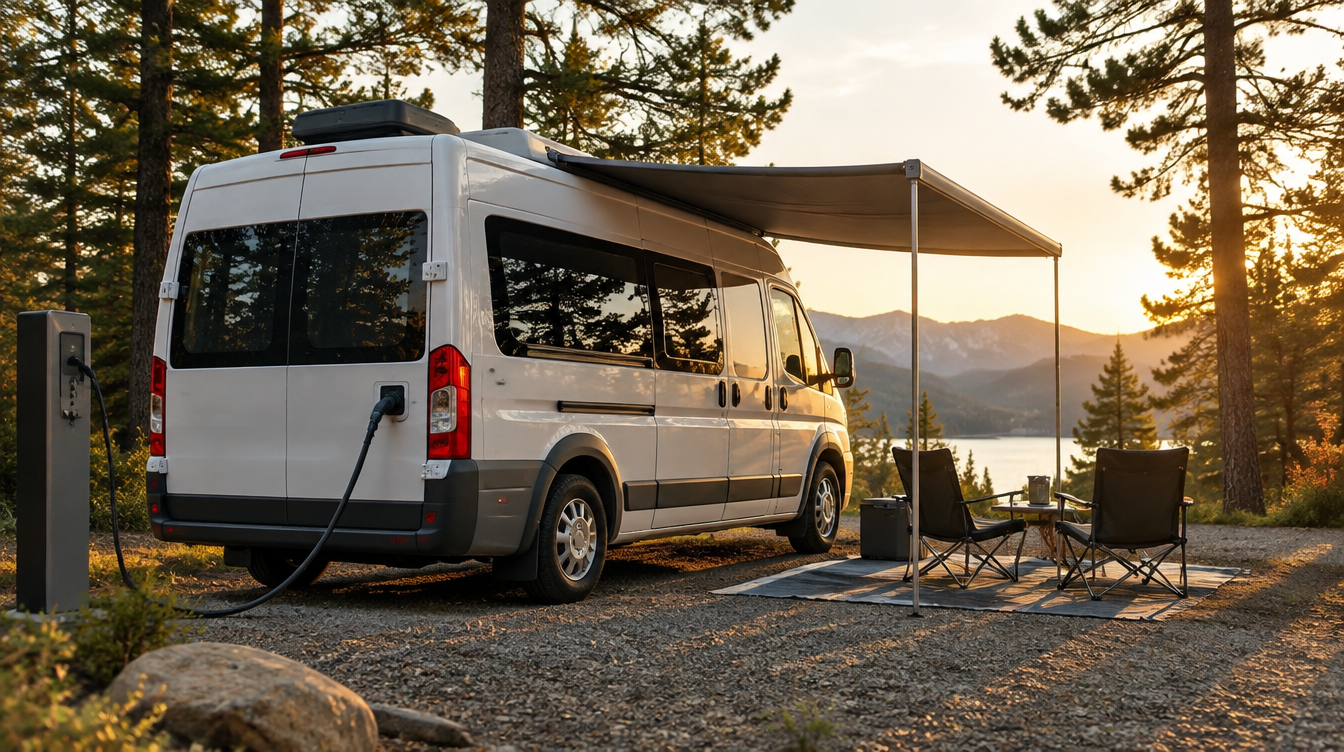
Charging an Electric Camper Van on the Road
- Plan trips around DC fast chargers, the only way to add serious range during the day. Use the US Department of Energy station locator to map them along your route.
- Treat overnight Level 2 charging at home or a campground as your daily routine.
- Leave a 20–30% buffer when you plan charging stops, because a loaded van uses more energy than the display suggests.
- Solar charges the living battery, not the drive battery. See our RV solar panels guide for sizing.
- Heating overnight from the traction battery erodes range, so pair the van with a separate heater. Our guide to heating a camper van compares diesel, propane and electric options.
The US EPA and Department of Energy fuel economy site also lists official electric range and efficiency ratings for vehicles it covers, which helps when you compare against builder claims.
Who Should Buy an Electric Camper Van?
| Use case | Fit | Why |
|---|---|---|
| Weekend trips within 100 miles | Strong | Range is enough even with a loaded build |
| Mobile office at job sites or coworking spots | Strong | Quiet, no exhaust, easy overnight charging |
| Stealth city camping | Good | Silent operation draws less attention |
| Cross-country touring | Weak | Charger gaps and long stops slow every day |
| Remote boondocking | Weak | Few chargers far from towns |
| Full-time van life | Weak | Winter heating and range anxiety add up |
If the van will double as a workspace, read our mobile office van setup guide and browse mobile office vans. For remote trips, our boondocking guide shows how far from services free camping can take you.
Electric vs Gas vs Diesel: What It Costs Up Front
| Platform | Gas or diesel cargo van | Electric cargo van | Up-front premium |
|---|---|---|---|
| Ford Transit | About $48,000 | About $53,000 (E-Transit) | About $5,000 |
| Ram ProMaster | About $44,960 | About $58,600 (ProMaster EV) | About $13,600 |
| Mercedes Sprinter | About $49,000 | About $64,000 (eSprinter) | About $15,000 |
Starting prices come from the FarOutRide van comparison and exclude conversion costs. Charging at home usually costs less per mile than gas or diesel, but public fast charging can erase much of that saving. Run your own numbers with our camper van cost calculator and see our breakdown of how much a camper van costs.
7 Things to Check Before Buying an Electric Camper Van
- Real range with the build installed, not the rated figure
- Battery warranty length and what counts as degradation
- Remaining payload after the build (the E-Transit cargo van carries roughly 3,300–4,200 lb depending on configuration)
- A heating system that does not draw from the drive battery
- Onboard charger speed and whether the builder fitted a clean power setup
- Insurance rules for EV conversions. Read our camper van insurance cost guide.
- Financing terms for a higher-priced base van. See how to finance a camper van.
Electric Camper Vans for Sale: Where to Start
Start with the eco friendly vans collection, then confirm the powertrain, battery size and warranty directly with the builder. You can also browse Sprinter camper vans, Transit camper vans and Ram ProMaster listings, or open the full camper vans for sale list. Still deciding on a platform? Our Sprinter vs Transit vs ProMaster comparison covers the trade-offs, and the AWD van guide helps if you want traction on rough roads.
Frequently Asked Questions
Is there a fully electric camper van?
Yes, but almost all of them are electric cargo vans converted by builders. Factory-built electric campers are still rare.
How far can an electric camper van go on one charge?
Rated range is about 159–162 miles for the E-Transit and ProMaster EV and roughly 250–270 miles for the eSprinter. With a loaded build, plan on half to three-quarters of those figures.
Can you use an E-Transit as a camper van?
Yes, for weekend trips, stealth camping or a mobile office. It is a poor fit for cross-country touring.
Is the eSprinter good for van life?
It suits regional travel and part-time van life. Full-time or winter use is harder because of range and heating.
Are electric camper vans cheaper to run?
Home charging is usually cheaper per mile than fuel, but the higher purchase price and public charging costs can offset the savings.
How do you heat an electric camper van?
Use a separate diesel or propane heater so you do not drain the drive battery overnight.
Find an efficient build before you buy. Compare range-friendly layouts, drivetrains and builders side by side in our eco friendly vans collection, or explore top van builders.
Range, price and battery figures come from manufacturer and tester reports and vary by trim, load, speed and weather. Verify current specs and incentives before you buy. General information, not financial advice.